Uganda's tenth round of National Health Accounts (NHA) presents a comprehensive analysis of health financing flows for Financial Years 2021/22 and 2022/23, using the internationally recognized System of Health Accounts (SHA-2011) methodology. The report tracks financial resources from their origin government, households, corporations, and development partners through financing schemes and agents to health service providers and functions, with targeted sub-analyses on HIV/AIDS, malaria, tuberculosis, reproductive health, and non-communicable diseases.

This integrated report assesses maternal, newborn and child health services alongside MPDSR implementation in Uganda during FY 2024/25. Over five years, institutional maternal mortality declined by 25%, while perinatal mortality declined by 24%. The Ministry strengthened regional accountability, weekly learning and the use of MPDSR findings to inform planning and action. The report prioritises improving health-system readiness, quality of care and implementation of recommendations across the continuum of care

This investment case presents the economic and health rationale for expanding private-sector participation in family planning services in Uganda. Modelling shows that the proposed investments could avert approximately 3,175 maternal deaths and generate USD 107 million in cost savings. The way forward includes strengthening public-private partnerships, reforming the regulatory environment, improving private-provider capacity, and expanding efficient supply chains to increase equitable access to quality family planning services

This inaugural report documents Uganda’s multi-sectoral response to teenage pregnancy and child marriage. Approximately 1,000 teenage girls become pregnant daily, while 34% of girls are married before age 18. Uganda established the Teenage Pregnancy Surveillance, Response and Accountability Framework and initiated coordinated interventions across health, education, gender, justice and community sectors. The report calls for stronger surveillance, sustainable financing and expansion of proven district-level interventions.

This report analyses maternal and perinatal mortality in Uganda during FY2023/24, focusing on delays in seeking, reaching and receiving quality care. Over five years, institutional maternal mortality declined by 17.4%, while institutional perinatal mortality fell by 30%. Uganda strengthened MPDSR accountability and Local Maternity and Neonatal Systems, with the report prioritizing timely referrals, improved quality of care and consistent follow-up of death-review recommendations.
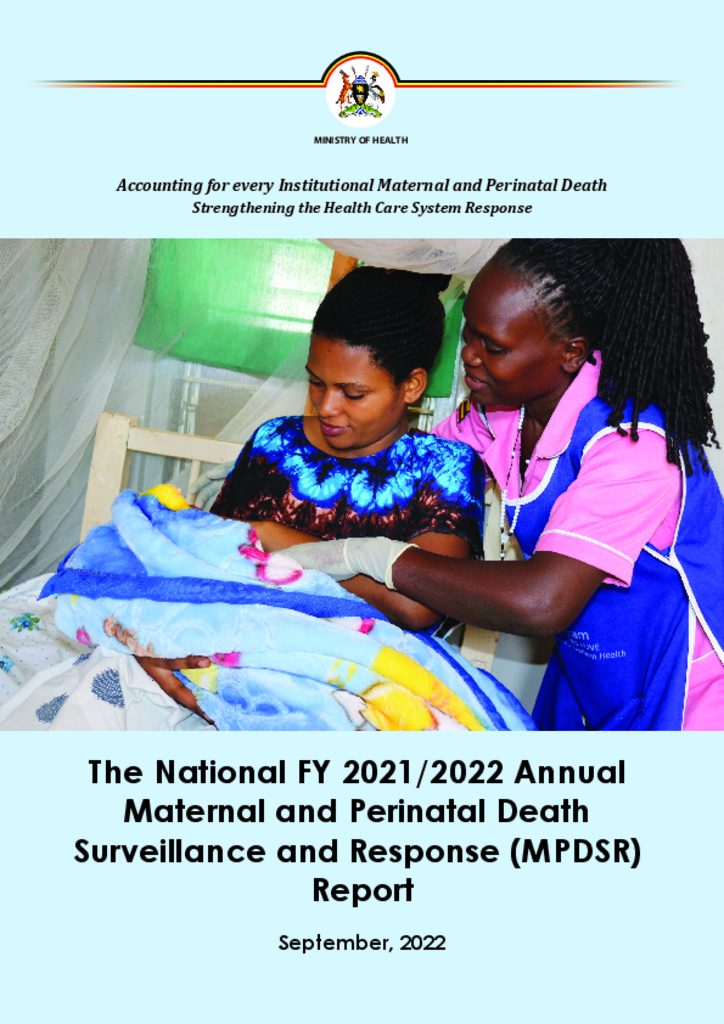
This report documents Uganda’s MPDSR implementation during FY2021/22. The institutional maternal mortality ratio declined to 84 deaths per 100,000 deliveries, while institutional perinatal mortality fell to 18.5 deaths per 1,000 births. It highlights strengthened death reviews, weekly learning platforms, and improved emergency obstetric and newborn care. The report calls for better implementation and tracking of review recommendations to prevent similar deaths.

This report evaluates the performance and commodity security of Uganda’s health supply chain managed under the Ministry of Health from January to December 2025. Using aggregated operational data, it assesses logistics metrics across public health facilities, national drug authorities, and private-not-for-profit sectors. Key findings show that strategic partnerships among government bodies, international donors, and civil society enabled coordinated distribution across national and district networks. Ultimately, multi-stakeholder coordination remains essential to maintaining supply chain resilience and improving health commodity access nationwide.

The report assesses NPECAF performance for Q3 FY 2025/26, focusing on pharmaceutical accountability, essential medicines availability, governance, and supply chain performance. It highlights key achievements, challenges, and actions needed to strengthen medicines management and health service delivery in Uganda.

The report is produced under the Department of Pharmaceuticals and Natural Medicines (DPNM) and focuses on pharmaceutical stewardship, medicines accountability, essential health commodities, pharmacovigilance, antimicrobial stewardship and health supply-chain performance.

The Framework for Strengthening Joint Planning and Budgeting in the Uganda Health Sector provides a structured approach for harmonizing health-sector planning, budgeting and annual work plans. It promotes coordinated resource mobilization, partner engagement, integrated budgeting, accountability and performance monitoring at national and sub-national levels. The framework aims to improve efficiency, transparency and alignment of health-sector investments with national priorities and Universal Health Coverage goals.
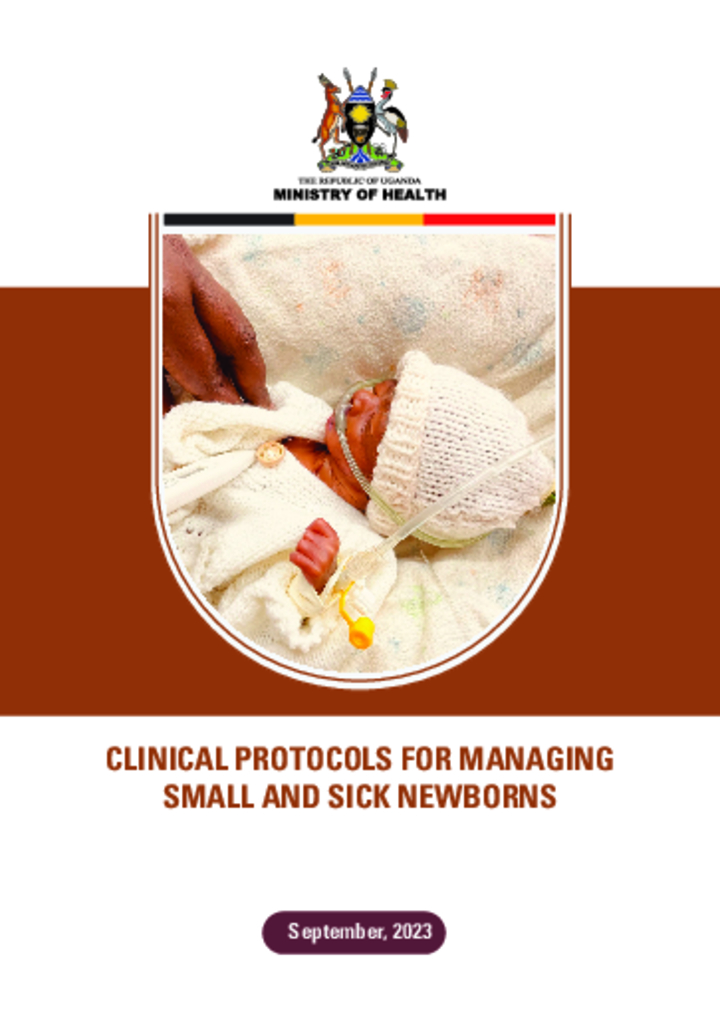
The MoH Clinical Protocols for Sick Newborn (2023) provide comprehensive, evidence-based guidance for the assessment, diagnosis, treatment, and referral of sick and preterm newborns. The protocols standardise neonatal care, strengthen infection prevention and control, and improve the quality of newborn health services to reduce neonatal morbidity and mortality
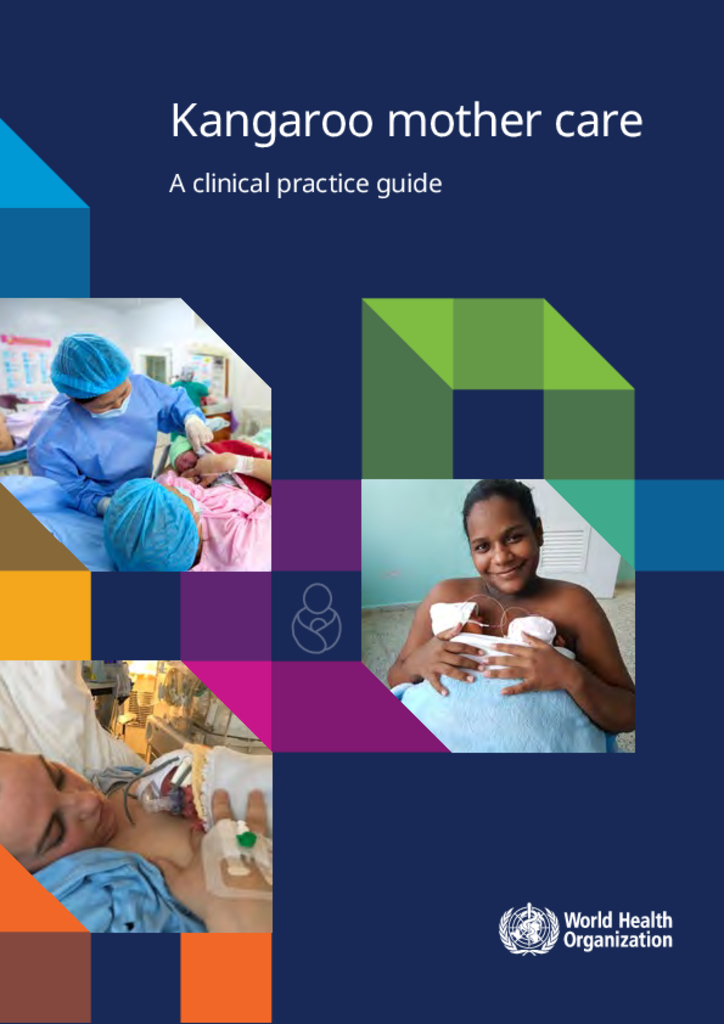
The Kangaroo Mother Care: A Clinical Practice Guide provides evidence-based guidance on implementing and practising Kangaroo Mother Care for preterm and low-birth-weight newborns in health facilities and at home. It outlines best practices for prolonged skin-to-skin contact, breastfeeding, family involvement, and continuity of care to improve newborn survival, growth, and development.