This investment case presents the economic and health rationale for expanding private-sector participation in family planning services in Uganda. Modelling shows that the proposed investments could avert approximately 3,175 maternal deaths and generate USD 107 million in cost savings. The way forward includes strengthening public-private partnerships, reforming the regulatory environment, improving private-provider capacity, and expanding efficient supply chains to increase equitable access to quality family planning services
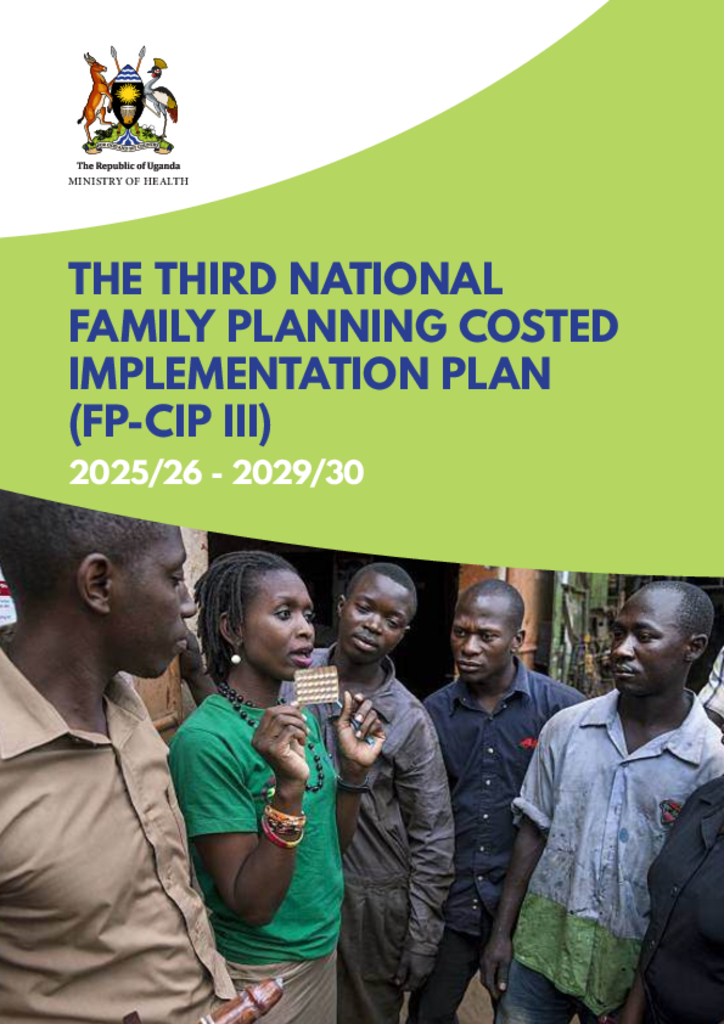
The FP-CIP III emphasizes measurable, sustainable outcomes by embedding FP within routine health services, national development planning, and existing government accountability platforms. By shifting from donor reliance to predictable domestic financing and multi-sectoral ownership, this plan positions family planning as a core driver of human capital development, economic productivity, and Uganda’s broader Vision 2040 aspirations.For FP-CIP III to secure the demographic dividend and contribute meaningfully to national development, it must prioritize institutionalization, financial sustainability, and robust governance. Failure to enact this paradigm shift will leave Uganda substantially off-track from its commitments to its people and its vision for a prosperous future.
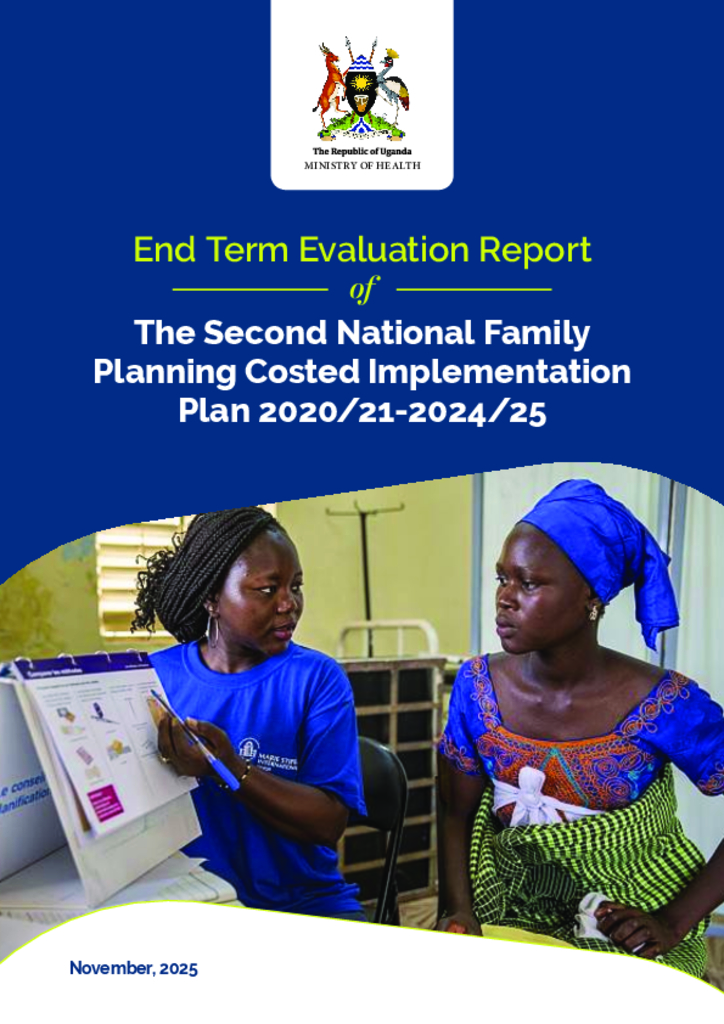
The FP-CIP II period demonstrated Uganda’s capacity to expand family planning access and innovate in service delivery - however, these gains are fragile and incomplete. The fundamental lesson is that increasing the number of users is insufficient without parallel investment in the systems that ensure sustained, high-quality, and equitable access.
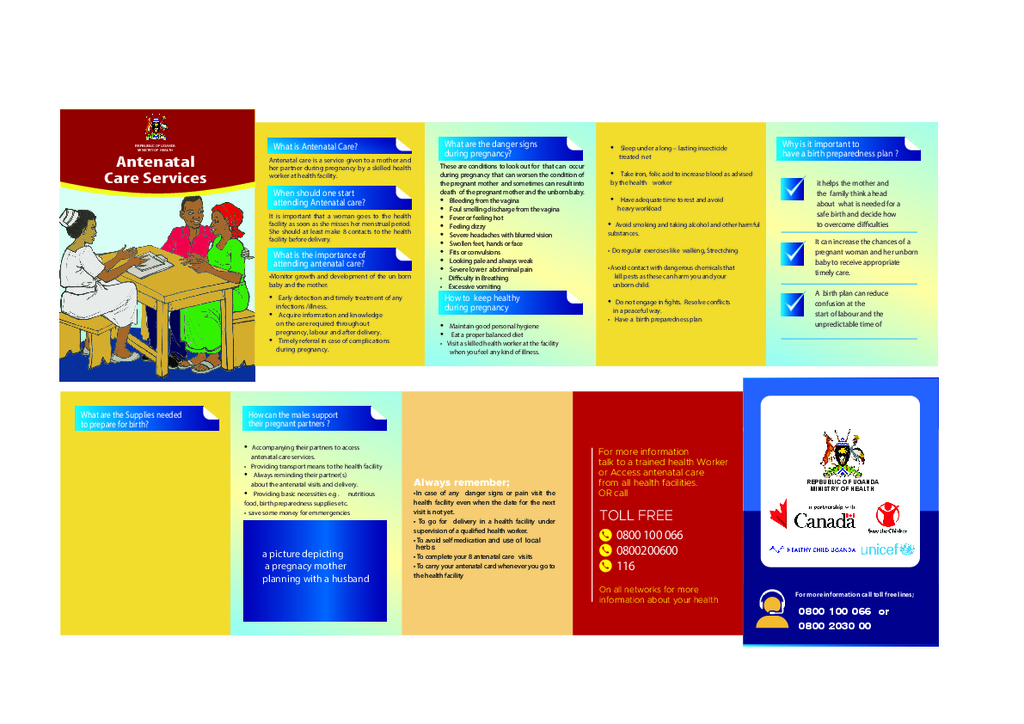
Antenatal care (ANC) is a vital service for pregnant women that ensures the health of both mother and baby through early and regular check-ups. It helps monitor pregnancy, detect complications, and provide guidance on proper nutrition, hygiene, and birth preparedness. Attending at least eight visits and recognizing danger signs enables timely care, ultimately improving maternal and newborn health outcomes.
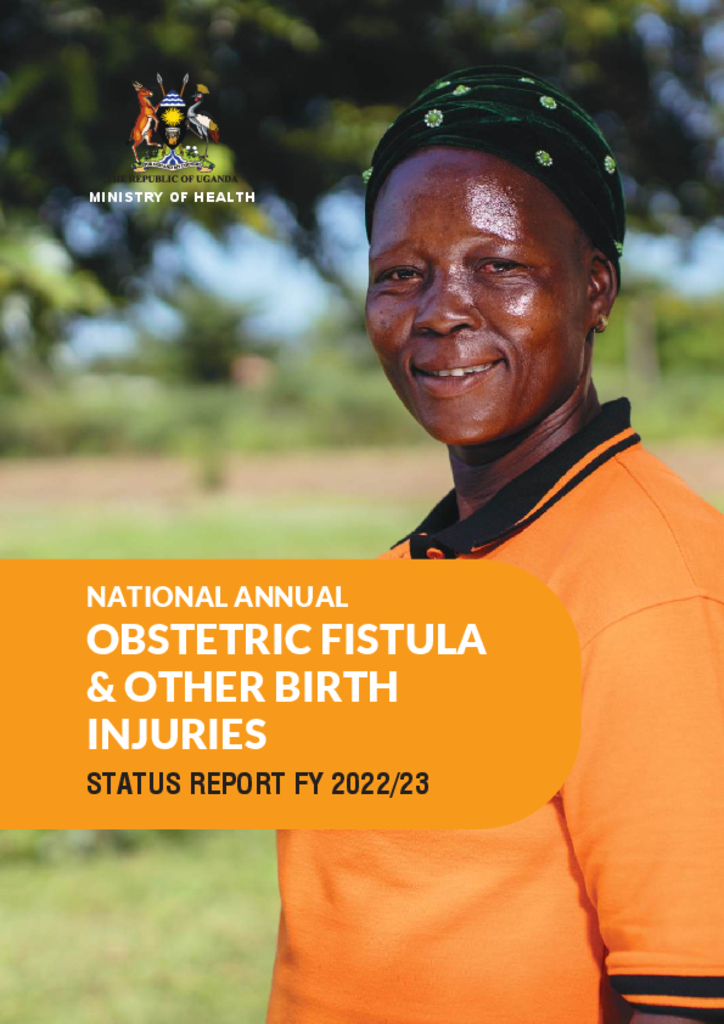
The National Annual Obstetric Fistula & Other Birth Injuries Status Report FY 2022/23 summarizes Uganda’s progress in prevention, surgical repair, and reintegration of fistula patients. It presents service delivery performance, partner contributions, and system gaps affecting access to timely care.
The report highlights the need for improved case identification, community awareness, data reporting, and strengthened coordination to accelerate elimination efforts.
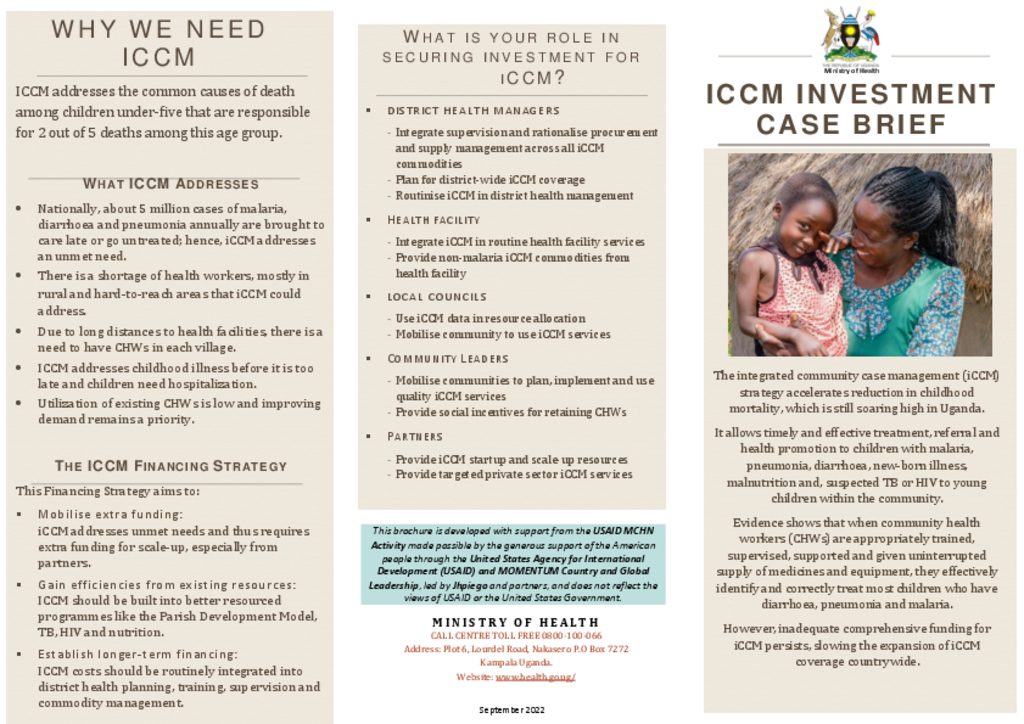
This iCCM Financing Strategy aims to Mobilise extra funding, Gain efficiencies from existing resources and Establish longer- term financing.
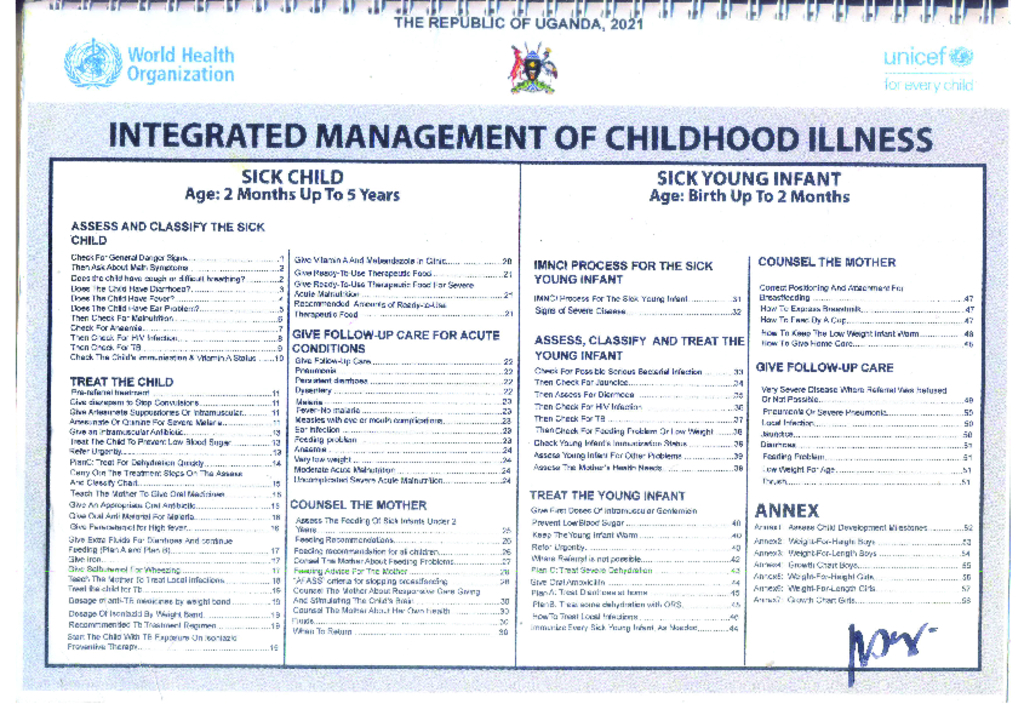
A child with any general sign needs URGENT attention; complete the assessment and any pre-referral treatment immediately so referral is not delayed
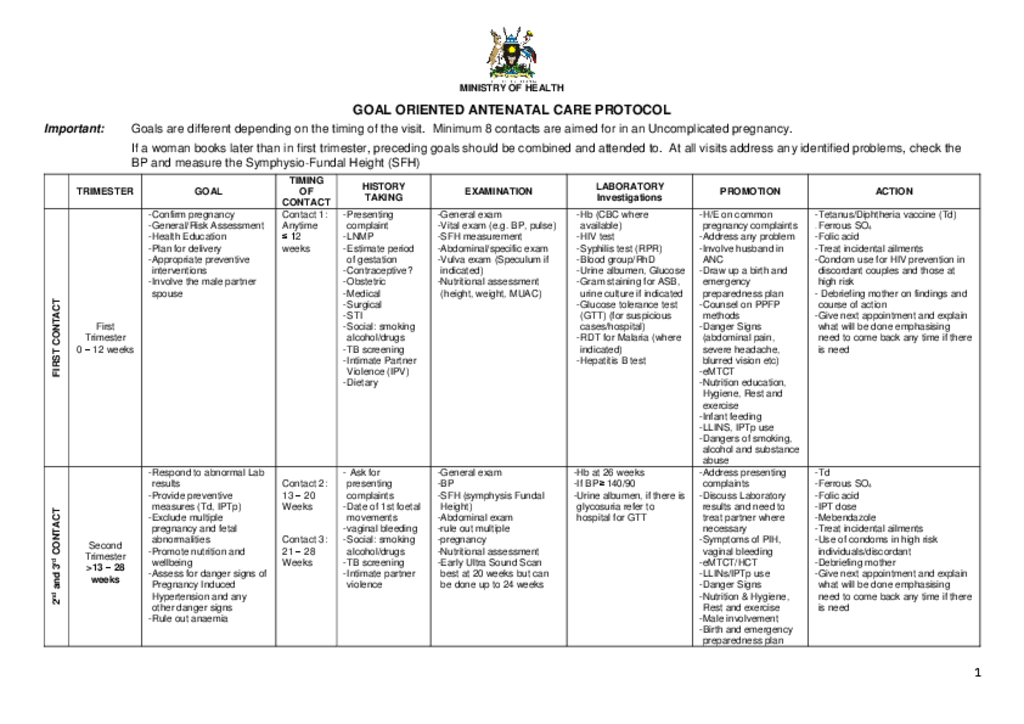
Goals are different depending on the timing of the visit. Minimum 8 contacts are aimed for in an Uncomplicated pregnancy. If a woman books later than in first trimester, preceding goals should be combined and attended to. At all visits address any identified problems, check the BP and measure the Symphysio-Fundal Height (SFH)
The Ministry of Health (MoH) has developed an Activity Framework that aims at accelerating reduction of maternal morbidity and mortality due to PPH. This Framework is an addendum to existing national guidelines and tools, but with a lens of accelerating implementation. The Framework is informed by current global knowledge and evidence-based high impact interventions for prevention and management of PPH. The MoH is mandated to monitor implementation of the Framework and provide ongoing updates to all stakeholders, on regular basis.
The Government of Uganda has prioritised the promotion and practice of family planning as part of a strategy to achieve the national goal of increasing household incomes and improved quality of life of Ugandans. The FP-CIP II, was developed to provide a strategic direction for family planning programming and elaborates how the multi-sectoral approach will play a role in not only addressing the fertility concerns, but also ensure quality family planning services and information for women and men of reproductive age.
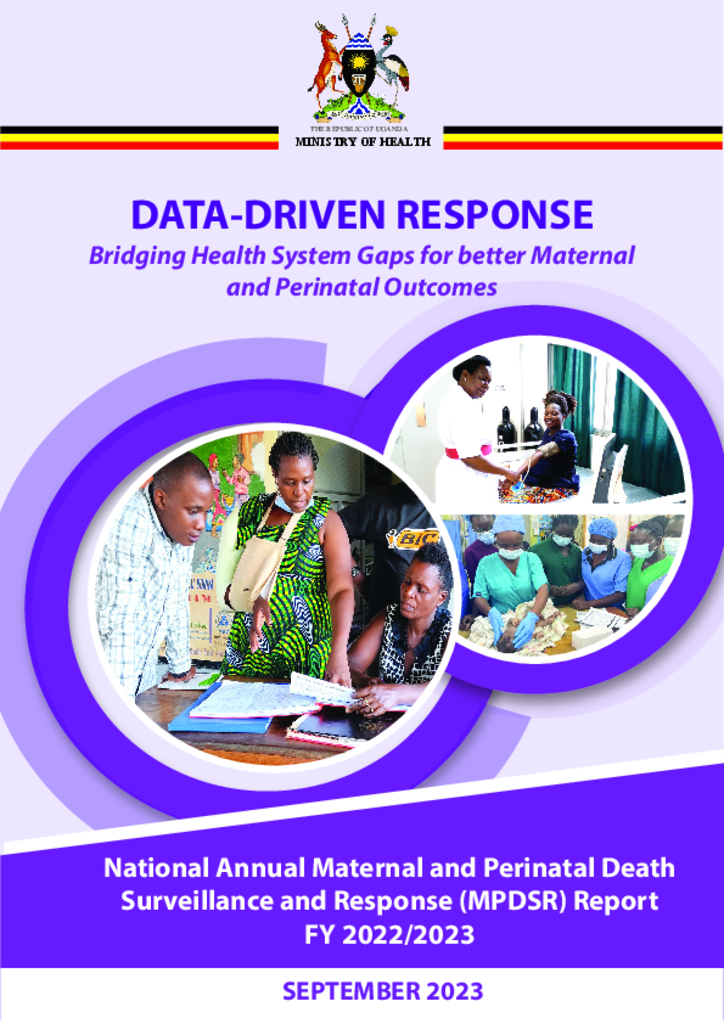
Under the Sustainable Development Goals (SDG) agenda, each country has been given a maternal and newborn mortality reduction goal to contribute to the global target of reducing maternal mortality to 70/100.000 live births. The MPDSR system aims at identifying ALL maternal and perinatal deaths, determine causes of death and avoidable factors that lead to maternal/newborn deaths so as to respond with actions aimed at preventing future similar deaths. The MPDSR system emphasizes continuous identification and reporting of maternal/perinatal deaths and linking that information to quality improvement (QI) processes.
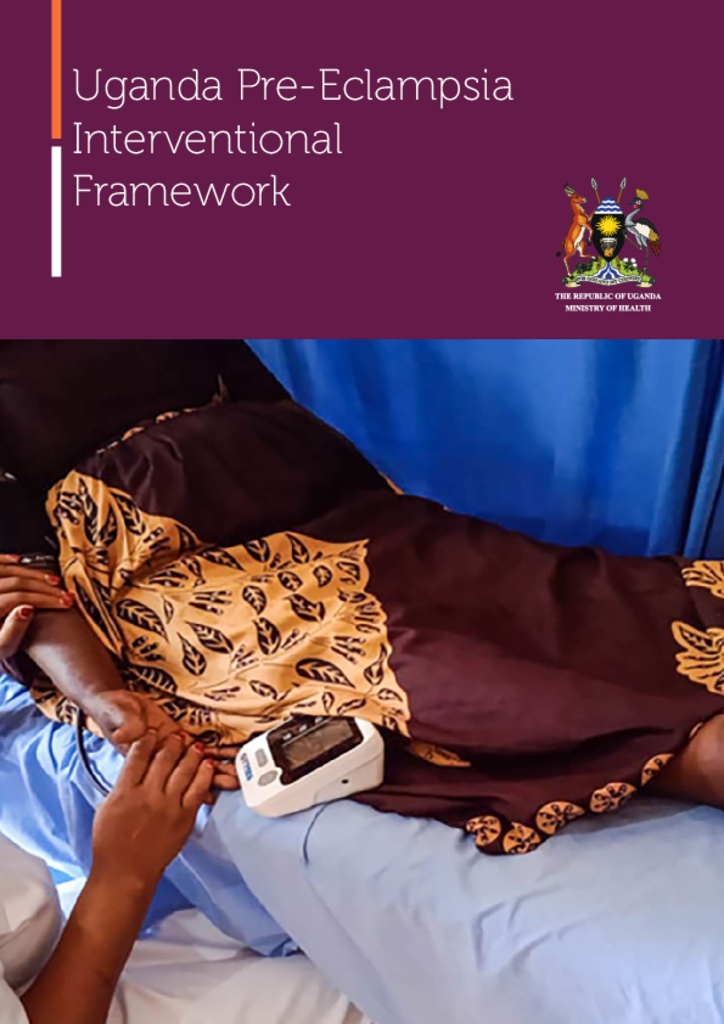
The pre-eclampsia interventional framework will provide a basis for tracking implementation and assessment of achievements against targets, with the overall aim of reducing the maternal and neonatal morbidity and mortality due to pre-eclampsia. The framework has been designed to provide updated, practical and useful information in monitoring and evaluation, data collection, management and lastly implementation arrangements for the prevention and management of pre-eclampsia and eclampsia. The frame work requires active involvement of all stake holders right from policy and advocacy level to the clinical teams involved in patient care.