This investment case presents the economic and health rationale for expanding private-sector participation in family planning services in Uganda. Modelling shows that the proposed investments could avert approximately 3,175 maternal deaths and generate USD 107 million in cost savings. The way forward includes strengthening public-private partnerships, reforming the regulatory environment, improving private-provider capacity, and expanding efficient supply chains to increase equitable access to quality family planning services

This inaugural report documents Uganda’s multi-sectoral response to teenage pregnancy and child marriage. Approximately 1,000 teenage girls become pregnant daily, while 34% of girls are married before age 18. Uganda established the Teenage Pregnancy Surveillance, Response and Accountability Framework and initiated coordinated interventions across health, education, gender, justice and community sectors. The report calls for stronger surveillance, sustainable financing and expansion of proven district-level interventions.
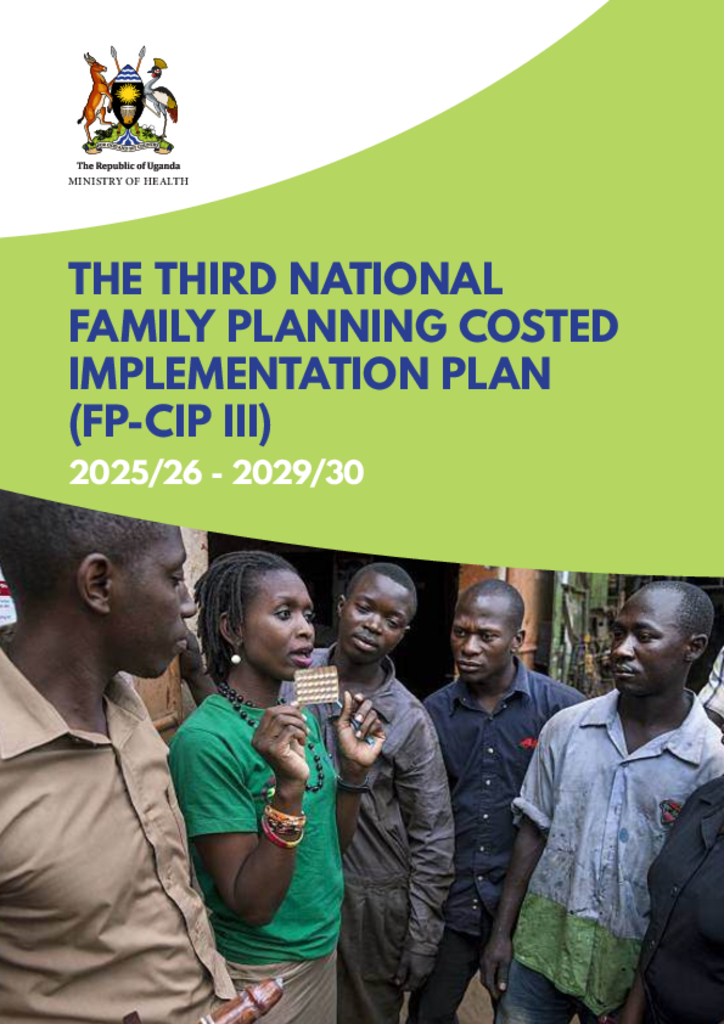
The FP-CIP III emphasizes measurable, sustainable outcomes by embedding FP within routine health services, national development planning, and existing government accountability platforms. By shifting from donor reliance to predictable domestic financing and multi-sectoral ownership, this plan positions family planning as a core driver of human capital development, economic productivity, and Uganda’s broader Vision 2040 aspirations.For FP-CIP III to secure the demographic dividend and contribute meaningfully to national development, it must prioritize institutionalization, financial sustainability, and robust governance. Failure to enact this paradigm shift will leave Uganda substantially off-track from its commitments to its people and its vision for a prosperous future.
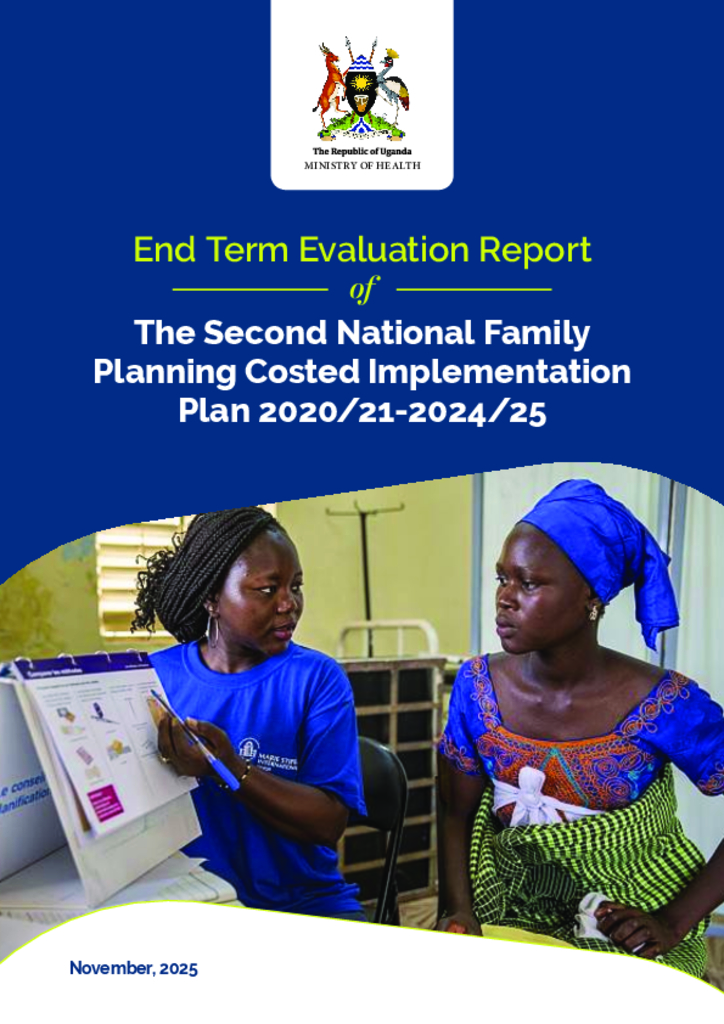
The FP-CIP II period demonstrated Uganda’s capacity to expand family planning access and innovate in service delivery - however, these gains are fragile and incomplete. The fundamental lesson is that increasing the number of users is insufficient without parallel investment in the systems that ensure sustained, high-quality, and equitable access.
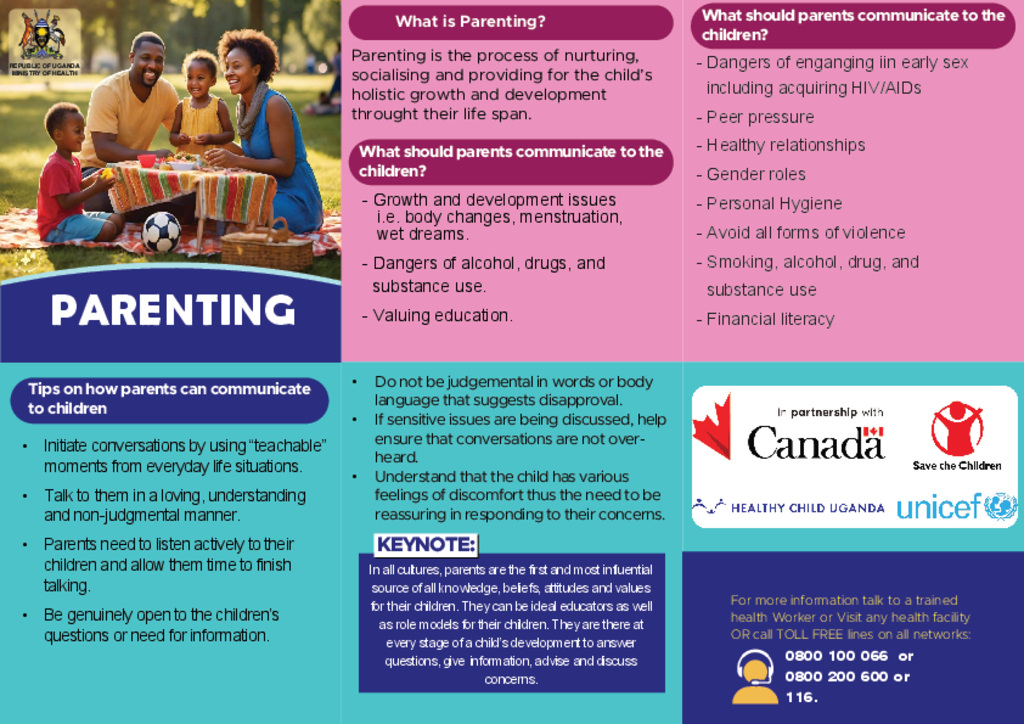
This Ministry of Health document highlights parenting as nurturing a child’s development through supportive communication, guidance, and education on health, behavior, and life skills.
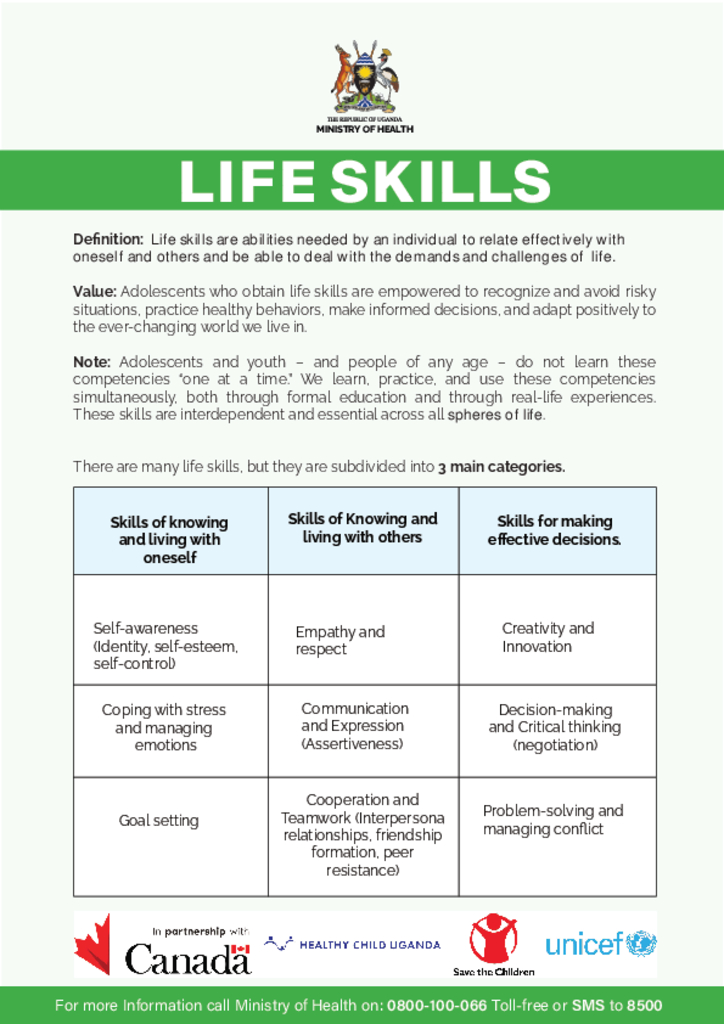
This Ministry of Health document defines life skills as essential abilities that help individuals manage themselves, relate well with others, and handle life’s challenges. It highlights their role in promoting healthy behavior and informed decision-making, grouping them into personal, social, and cognitive skill categories.
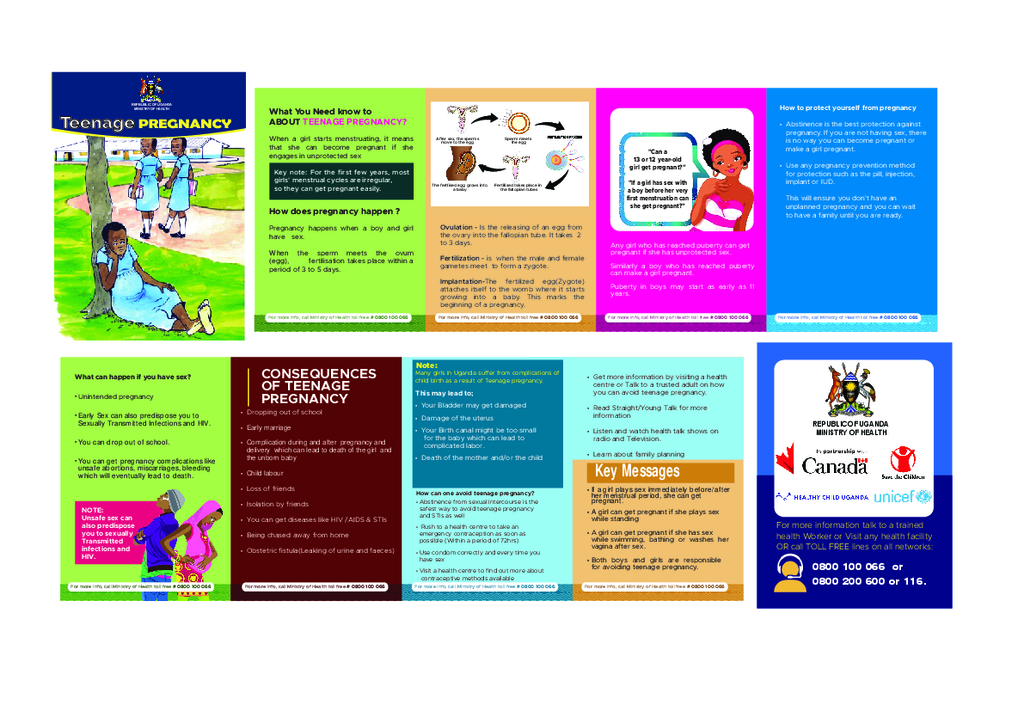
Teenage pregnancy, occurring between ages 10 and 19, is mainly caused by early sexual activity, peer pressure, lack of accurate information, substance use, and sexual abuse. It poses serious health, social, and economic risks, including complications during childbirth, school dropout, stigma, and poverty. Prevention focuses on abstinence, access to accurate reproductive health information, resisting peer pressure, and prioritizing education and future goals.
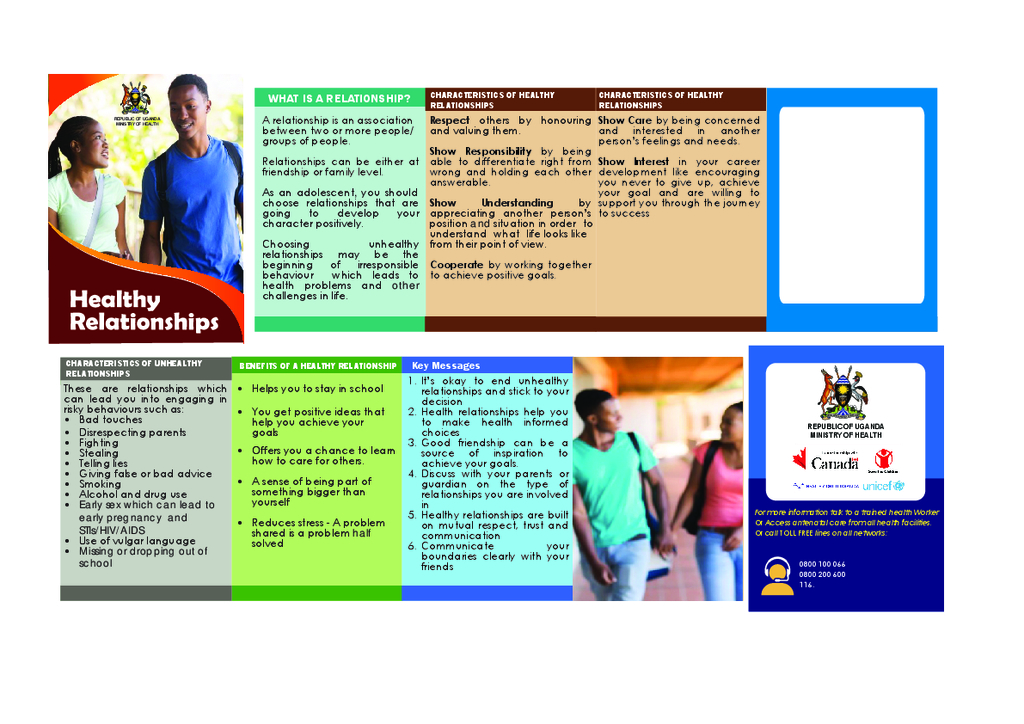
Relationships are connections between individuals that influence adolescent development. Healthy relationships are characterized by respect, care, responsibility, and support for personal growth, while unhealthy ones involve abuse, dishonesty, risky behaviors, and negative influences. Positive relationships promote well-being, reduce stress, and support education and life goals. Adolescents are encouraged to set boundaries, seek guidance, and choose relationships built on respect, trust, and good communication.
The document describes child marriage as an illegal and harmful practice in Uganda, outlining its causes, effects, and prevention through education, law enforcement, and protection of children’s rights.
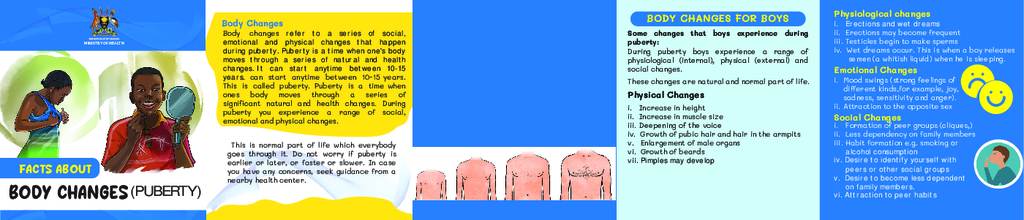
The document describes puberty as a normal stage of growth involving physical, emotional, and social changes in boys and girls. It emphasizes that these changes are natural, require proper hygiene and guidance, and should not lead to risky behaviors.
The document explains abstinence as the deliberate avoidance of sexual intercourse as an effective method for preventing pregnancy and sexually transmitted infections (STIs), including HIV. It highlights that abstinence is suitable for both boys and girls and promotes multiple benefits such as emotional well-being, self-respect, focus on education, and protection from social and health risks. The document also outlines practical strategies to support abstinence, including resisting peer pressure, avoiding risky situations, and engaging in positive activities. Overall, it encourages young people to prioritize their health, future goals, and personal values by choosing abstinence.
The guideline on self-care interventions for health and well-being encompasses combined efforts to (i) improve antenatal, intrapartum and postnatal care; (ii) provide high-quality services for family planning, including infertility services; (iii) eliminate unsafe abortion; (iv) combat sexually transmitted infections (including HIV), reproductive tract infections, cervical cancer and other gynaecological morbidities; (v) promote sexual health; and (vi) address non-communicable diseases, including cardiovascular diseases and diabetes.