The goal of this tuberculosis (TB) infection control guidelines is to guide management staff, including health care workers, congregate settings managers and household heads to minimize the risk of TB transmission at Ugandan facilities in particular and the whole country in general. The current national infection control guidelines (2005) is silent on TB infection control measures. This guideline has been designed to address this gap and therefore is an addendum to the 2005 national infection control guideline.
Conventional light microscopy of Ziehl-Neelsen-stained smears prepared directly from sputum specimens is the most widely available test for diagnosis of tuberculosis (TB) in resource-limited settings. Ziehl-Neelsen microscopy is highly specific, but its sensitivity is variable (20–80%) and is significantly reduced in patients with extrapulmonary TB and in HIV-infected TB patients. Conventional fluorescence microscopy is more sensitive than Ziehl-Neelsen and takes less time, but its use has been limited by the high cost of mercury vapour light sources, the need for regular maintenance and the requirement for a dark room.
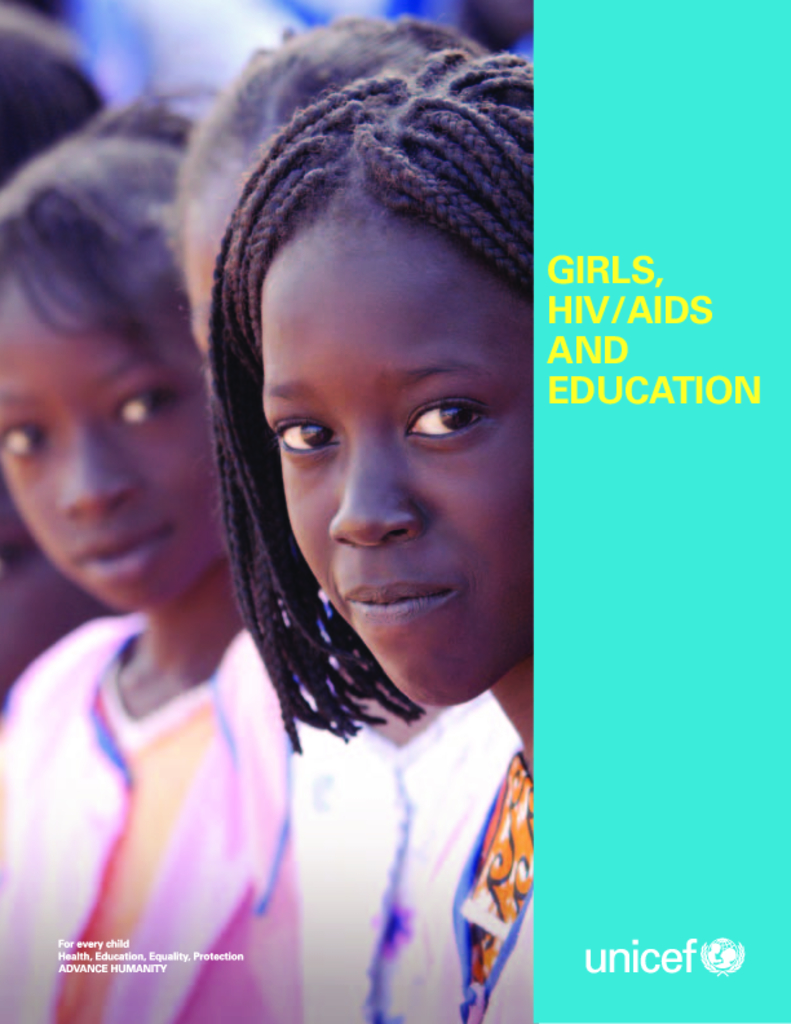
At the centre of an ever-strengthening HIV/AIDS storm, young people aged 15 to 24 now make up more than one quarter of the 38 million people living with the disease. More than half of the 5 million new infections in 2003 were among people under the age of 25.
The majority of these new infections were among young women, who, for reasons typically beyond their control, are at greater risk of contracting HIV, and who, for reasons most fully explained by gender disparities, bear a disproportionate share of the HIV/AIDS burden.
The global community has embarked on an historic quest to lay the foundation for the eventual end of the AIDS epidemic. This effort is more than merely visionary. It is entirely feasible. Unprecedented gains have been achieved in reducing the number of both adults and children newly infected with HIV, in lowering the numbers of people dying from AIDS-related causes and in implementing enabling policy frameworks that accelerate progress. A new era of hope has emerged in countries and communities across the world that had previously been devastated by AIDS.
The purpose of this document is to provide guidance to national AIDS programmes and partners on the use of indicators to measure and report on the country response.
The purpose of this document is to provide guidance to national AIDS programmes and partners actively involved in the country response to AIDS on use of core indicators to measure and report on the national response.The “2011 UN Political Declaration on HIV/AIDS: Intensifying our Efforts to Eliminate HIV/AIDS” (General Assembly resolution 65/277), which was adopted at the United Nations General Assembly High Level Meeting on AIDS in June 2011, mandated UNAIDS to support countries to report on the commitments in the 2011 UN Political Declaration on HIV/AIDS. In addition the 2011 Political Declaration called for a special report to the General Assembly on progress in accordance with global reporting on the Millennium Development Goals in the 2013 review of the Goals.
The purpose of this document is to provide guidance to national AIDS programmes and partners actively involved in the country response to AIDS on use of core indicators to measure and report on the national response.
The world has committed to ending the AIDS epidemic by 2030. How to reach this bold target within the Sustainable Development Goals is the central question facing the United Nations General Assembly High-Level Meeting on Ending AIDS, to be held from 8 to 10 June 2016. The extraordinary accomplishments of the last 15 years have inspired global confidence that this target can be achieved.
We are living in a decade of renewed global commitments to ending the vertical transmission of HIV. The world is now more than ever united in the drive to “welcome an HIV free generation”. Evidence demonstrates that with concerted efforts and strategic investment, there is the opportunity to see a global reduction of 50% in HIV incidence in women of reproductive age, in line with global targets.
A reduction to ‘zero’ in the unmet need for family planning among HIV‐positive women, a reduction to less than 5% in the risk of mother‐to‐child transmission of HIV, and access to antiretroviral therapy (ART) for 90% of eligible HIV‐positive women, are also deemed achievable. However, the virtual Elimination of Mother‐to‐Child Transmission (EMTCT) faces substantial challenges in low and middle income countries (LMICs) like Uganda.
Key including ‐ the Ministry of Health (MoH), the Uganda AIDS Commission (UAC), the Ministry of Local Government, the Ministry of Finance, other key ministries, parliamentarians, AIDS development partners, civil society and faith based organisations, the private sector and communities of people living with HIV (PLWHIV) ‐ need to come together to achieve these ambitious targets.
The set of case studies in this collection emerged from a session entitled Best Practices in Female Sex Worker Projects held at the Fourth International Congress on AIDS in Asia and the Pacific in Manila, October 1997. Preparation for the session began in May 1997 when UNAIDS sponsored an effort to learn about sex worker projects in the region. Lists of known potential projects were elicited from sex work networks, well-connected individuals and researchers. A call for responses was placed on the SEA-AIDS list server.
After intensive communication with 25 sex worker projects in the Asia-Pacific region, five were selected that asserted they could produce data to document their impact and effectiveness
The Consultation was called in response to recent resraech findings in sexually transmitted disease (STD) treatment and its effects on the tranmission of Immunodeficiency virus (HIV)
This is a dynamic and challenging time for those working in public health, in global health cooperation, and in tuberculosis control specifically. As a result of commitments to health at the highest political levels, there are unprecedented opportunities for expanding response to disease epidemics and simultaneously improving health systems.
These commitments have resulted in innovations in financing streams, public-private partnerships, civil society engagement, frameworks for cooperation, and channels of rapid communication and knowledge-sharing.