Measured by the numbers of people who die each year, tuberculosis (TB) is the world’s deadliest infectious disease. Transmitted through the air and primarily targeting the lungs, this disease caused by a bacterial infection claims three lives every minute.1,2 In 2014, more than 9 million people became ill with TB and 1.5 million died, making it the world’s leading infectious killer.3 Worldwide over 2 billion people are infected with Mycobacterium tuberculosis, the bacterium that causes TB, comprising a source of the illness that must be addressed if we are to be successful in ending the disease.
WHO has published a global TB report every year since 1997. The main aim of the report is to provide a comprehensive and up-to-date assessment of the TB epidemic, and of progress in prevention, diagnosis and treatment of the disease at global, regional and country levels. This is done in the context of recommended global TB strategies and targets endorsed by WHO’s Member States and broader development goals set by the United Nations (UN).
The purpose of WHO’s Global Tuberculosis Report is to provide a comprehensive and up-to-date assessment of the TB epidemic and of progress in care and prevention at global, regional and country levels.1 This is done in the context of recommended global TB strategies and associated targets, and broader development goals. For the period 2016–2035, these are WHO’s End TB Strategy and the United Nations’ (UN) Sustainable Development Goals (SDGs), which share a common aim: to end the global TB epidemic.
The Sustainable Development Goals (SDGs) for 2030 were adopted by the United Nations in 2015. One of the targets is to end the global TB epidemic. The WHO End TB Strategy, approved by the World Health Assembly in 2014, calls for a 90% reduction in TB deaths and an 80% reduction in the TB incidence rate by 2030, compared with 2015.
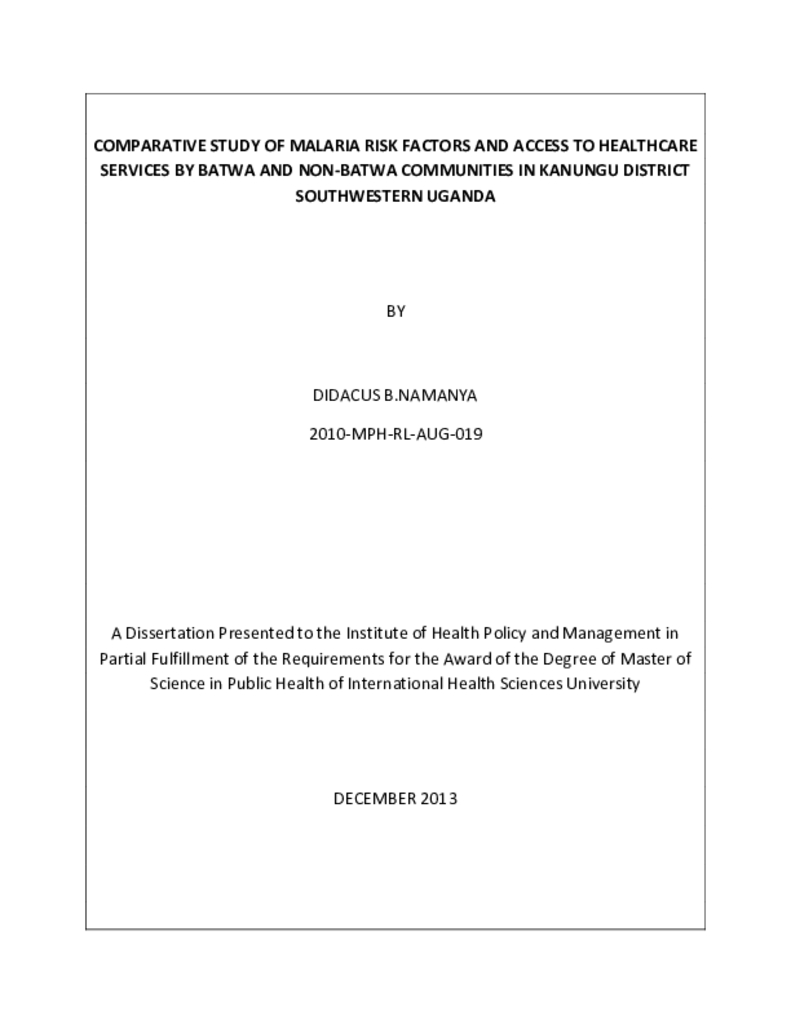
This study focused on risk factors for contracting malaria and access to health centre/hospital-based healthcare services by making a comparison of the Batwa indigenous people and their non-Batwa neighbours in Kanungu district. The researcher investigated how the two independent variables namely: risk factors for contracting malaria and health seeking behaviour of the two population groups impinged on the dependent variable: access to health centre/hospital-based case management of malaria.
This chapter presents the following sections: a background to the study which sets the context to the problem under study, statement of the problem, objectives of the study, research questions, significance of the study, conceptual framework,
The goal of this tuberculosis (TB) infection control guidelines is to guide management staff, including health care workers, congregate settings managers and household heads to minimize the risk of TB transmission at Ugandan facilities in particular and the whole country in general. The current national infection control guidelines (2005) is silent on TB infection control measures. This guideline has been designed to address this gap and therefore is an addendum to the 2005 national infection control guideline.
Conventional light microscopy of Ziehl-Neelsen-stained smears prepared directly from sputum specimens is the most widely available test for diagnosis of tuberculosis (TB) in resource-limited settings. Ziehl-Neelsen microscopy is highly specific, but its sensitivity is variable (20–80%) and is significantly reduced in patients with extrapulmonary TB and in HIV-infected TB patients. Conventional fluorescence microscopy is more sensitive than Ziehl-Neelsen and takes less time, but its use has been limited by the high cost of mercury vapour light sources, the need for regular maintenance and the requirement for a dark room.
Since mid 1990’s, WHO and partners have provided technical support to a large number of African countries to promote rational use of antimalarial medicines, monitor medicine efficacy and update treatment policies. In Uganda, resistance of Plasmodium falciparum to Chlororoquine rose to unacceptable levels compelling government to institute an interim malaria treatment policy in 2002. The interim policy recommended a combination treatment composed of Chloroquine and Sulfadoxine/Pyrimethamine (Fansider) as the first line treatment. Unfortunately, resistance to the antimalarial medicines persisted, leading to another change of policy in 2004. The new policy adopted Artemisinin-based Combination Treatment (ACT) as the first line treatment for malaria in Uganda. This was in line with the current WHO recommendation of use of combination therapies, particularly those containing an artemesinin based compound1.
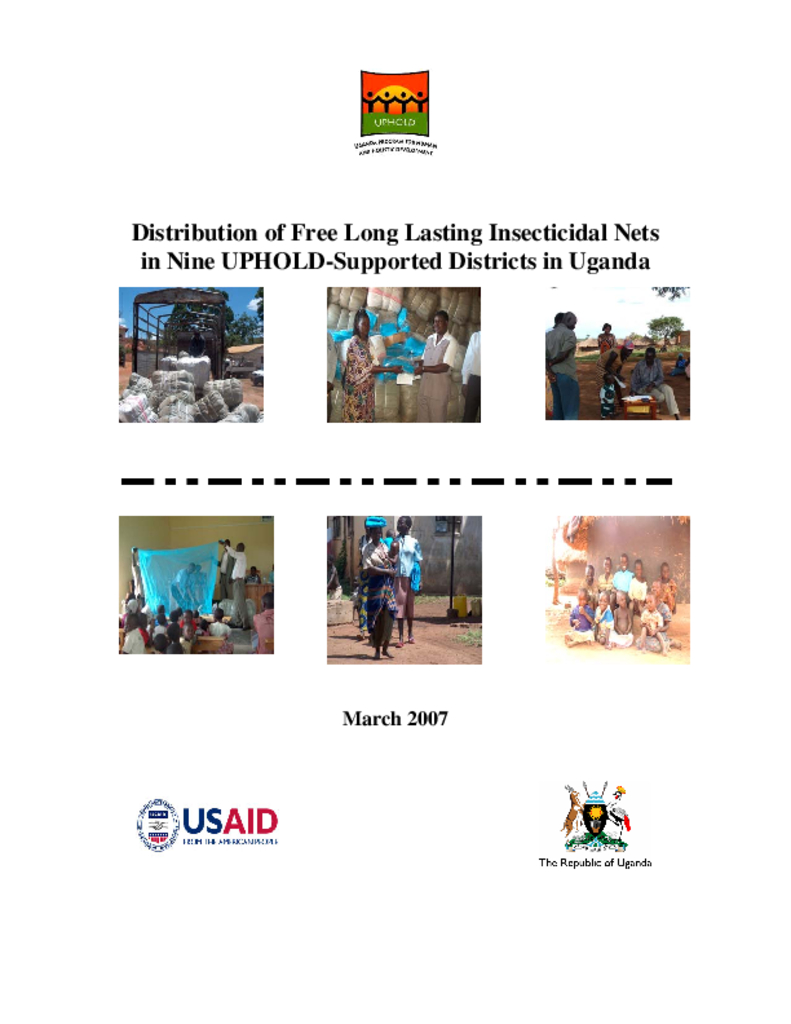
This report covers the experiences and lessons learned during the distribution of free long lasting insecticidal nets (LLINs) to nine UPHOLD supported districts between December 2005 and March 2006, using the existing Home-based Management of Fever (HBMF) system as the distribution channel.
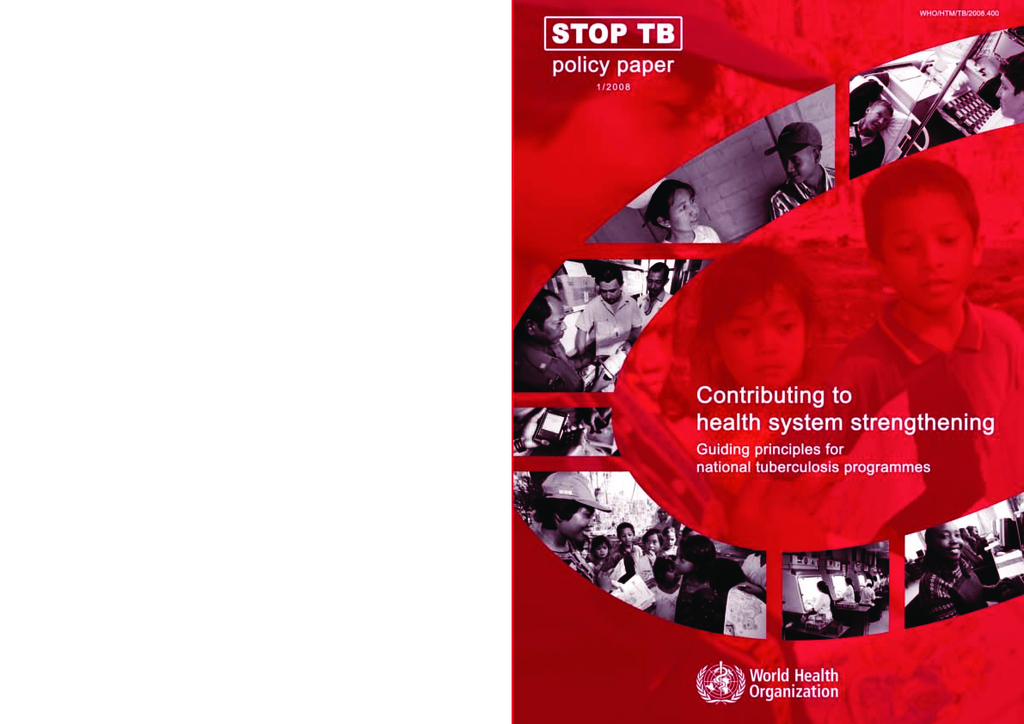
This is a dynamic and challenging time for those working in public health, in global health cooperation, and in tuberculosis control specifically. As a result of commitments to health at the highest political levels, there are unprecedented opportunities for expanding response to disease epidemics and simultaneously improving health systems.
These commitments have resulted in innovations in financing streams, public-private partnerships, civil society engagement, frameworks for cooperation, and channels of rapid communication and knowledge-sharing.
This Learner's Guide, Part I of the module on the Diagnosis and Management of Severe Falciparum Malaria, is made up of teaching materials, problems and a picture quiz covering all the activities involved in diagnosing and managing severe falciparum malaria at the hospital level. This guide is based upon the problem solving approach to education, and working through the study cases presented, you will develop the competence to manage correctly cases of severe falciparum malaria.
Together with Part II, the Tutor's Guide, it forms a training module which is designed to be used throughout a formal period of training and provides information, poses practical problems and suggested solutions in a simple, easily understandable form, so as to facilitate local adaptation and translation into local languages.
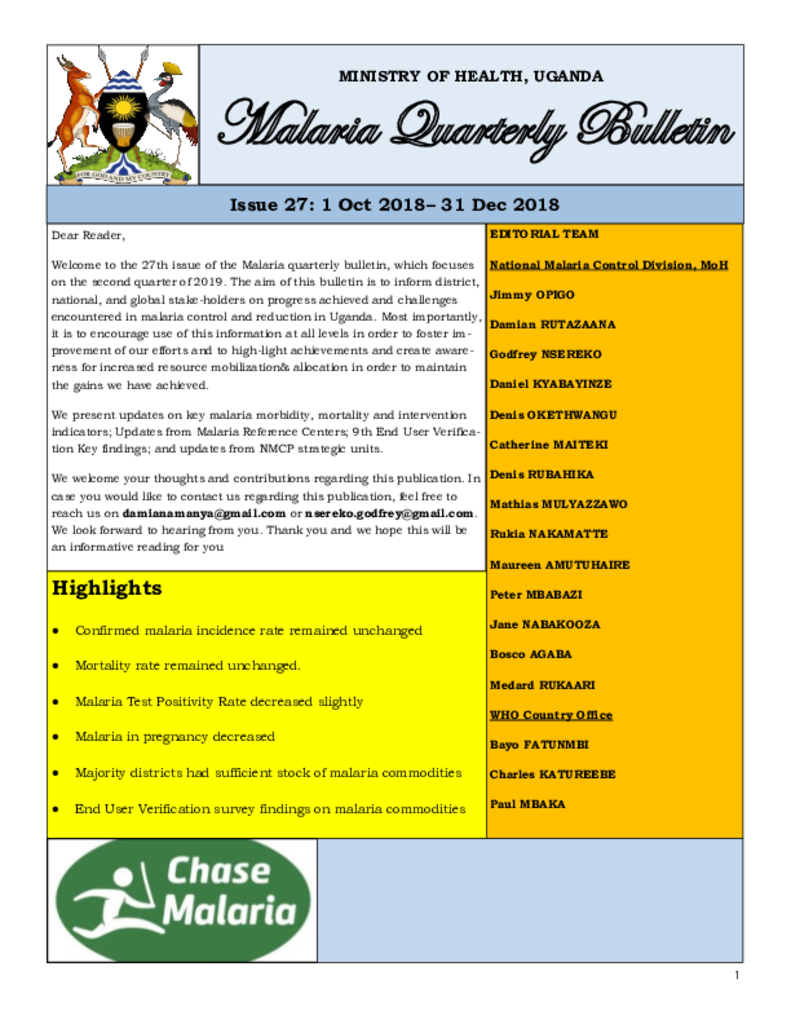
Welcome to the 27th issue of the Malaria quarterly bulletin, which focuses on the second quarter of 2019. The aim of this bulletin is to inform district, national, and global stake-holders on progress achieved and challenges encountered in malaria control and reduction in Uganda. Most importantly, it is to encourage use of this information at all levels in order to foster im-provement of our efforts and to high-light achievements and create aware-ness for increased resource mobilization& allocation in order to maintain the gains we have achieved.
We present updates on key malaria morbidity, mortality and intervention indicators; Updates from Malaria Reference Centers; 9th End User Verifica-tion Key findings; and updates from NMCP strategic units. We welcome your thoughts and contributions regarding this publication