This integrated report assesses maternal, newborn and child health services alongside MPDSR implementation in Uganda during FY 2024/25. Over five years, institutional maternal mortality declined by 25%, while perinatal mortality declined by 24%. The Ministry strengthened regional accountability, weekly learning and the use of MPDSR findings to inform planning and action. The report prioritises improving health-system readiness, quality of care and implementation of recommendations across the continuum of care

This report analyses maternal and perinatal mortality in Uganda during FY2023/24, focusing on delays in seeking, reaching and receiving quality care. Over five years, institutional maternal mortality declined by 17.4%, while institutional perinatal mortality fell by 30%. Uganda strengthened MPDSR accountability and Local Maternity and Neonatal Systems, with the report prioritizing timely referrals, improved quality of care and consistent follow-up of death-review recommendations.
This report documents Uganda’s MPDSR implementation during FY2021/22. The institutional maternal mortality ratio declined to 84 deaths per 100,000 deliveries, while institutional perinatal mortality fell to 18.5 deaths per 1,000 births. It highlights strengthened death reviews, weekly learning platforms, and improved emergency obstetric and newborn care. The report calls for better implementation and tracking of review recommendations to prevent similar deaths.
The MoH Clinical Protocols for Sick Newborn (2023) provide comprehensive, evidence-based guidance for the assessment, diagnosis, treatment, and referral of sick and preterm newborns. The protocols standardise neonatal care, strengthen infection prevention and control, and improve the quality of newborn health services to reduce neonatal morbidity and mortality
The Kangaroo Mother Care: A Clinical Practice Guide provides evidence-based guidance on implementing and practising Kangaroo Mother Care for preterm and low-birth-weight newborns in health facilities and at home. It outlines best practices for prolonged skin-to-skin contact, breastfeeding, family involvement, and continuity of care to improve newborn survival, growth, and development.
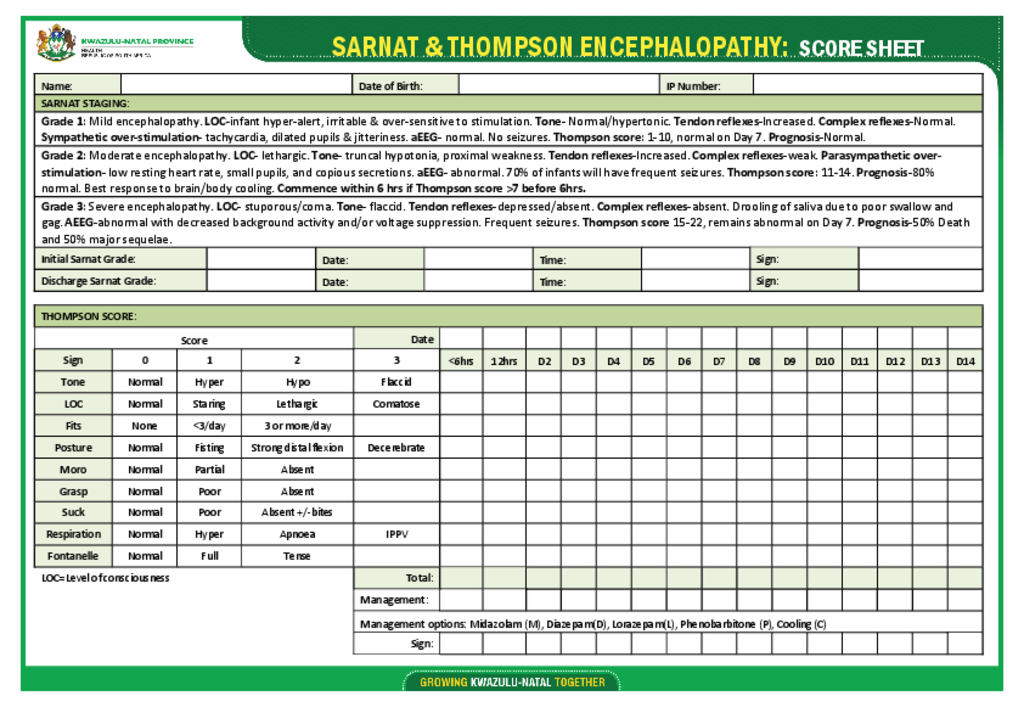
The HIE Score Chart is a clinical assessment tool used to evaluate the severity of Hypoxic-Ischaemic Encephalopathy (HIE) in newborns using the Sarnat staging and Thompson scoring systems. It supports the assessment, monitoring, treatment decisions, and prognosis of affected infants, facilitating timely and evidence-based neonatal care.

The New Ballard Score is a neonatal assessment tool used to estimate the gestational age of newborns by evaluating neuromuscular and physical maturity. It supports the classification of preterm, term, and post-term infants, enabling timely and appropriate neonatal care.
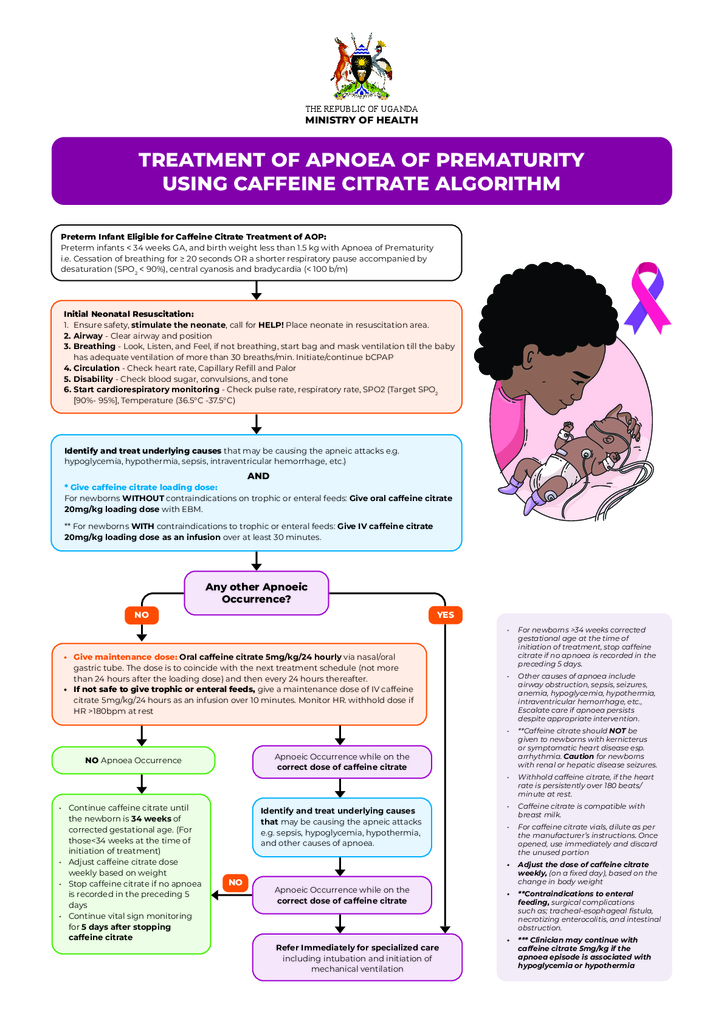
The Treatment of Apnoea of Prematurity Using Caffeine Citrate Algorithm provides a standardised clinical pathway for the assessment and treatment of apnoea in preterm infants using caffeine citrate. It outlines eligibility criteria, dosing, monitoring, management of underlying causes, and referral for specialised care to support safe, evidence-based neonatal practice and improve newborn outcomes.
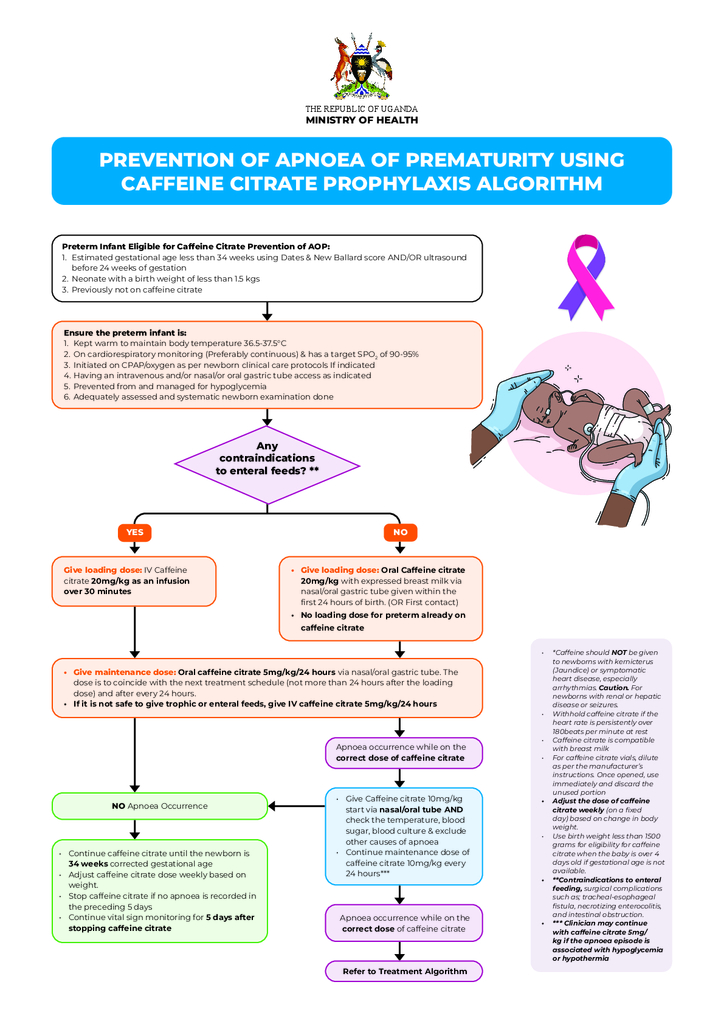
The Prevention of Apnoea of Prematurity Using Caffeine Citrate Prophylaxis Algorithm provides a standardised clinical pathway for preventing apnoea in eligible preterm infants through the appropriate use of caffeine citrate. It outlines eligibility criteria, dosing, monitoring, and follow-up to support safe, evidence-based neonatal care and improve newborn outcomes.
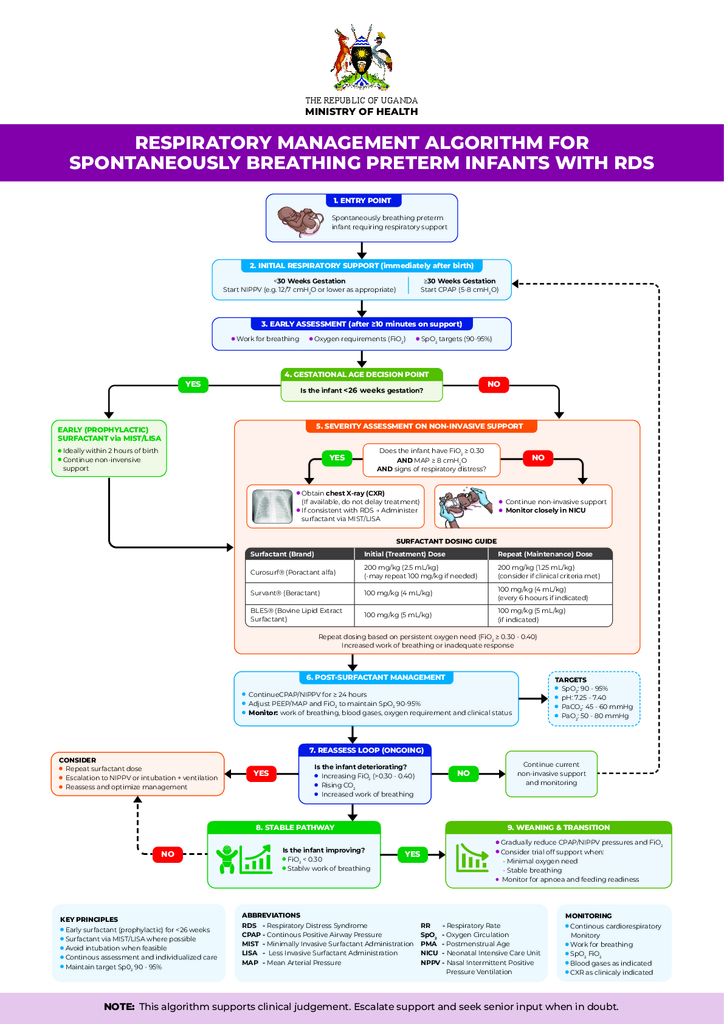
The Respiratory Management Algorithm for Spontaneously Breathing Preterm Infants with Respiratory Distress Syndrome (RDS) provides a standardised clinical pathway for assessing and managing preterm infants with RDS. It outlines indications for respiratory support, surfactant therapy, monitoring, and ongoing clinical management to improve neonatal outcomes and ensure consistent, evidence-based care.
Uganda’s family planning and reproductive health markets remain fragmented, with persistent inequities in access and inefficient use of public subsidies. The National Total Market Approach (TMA) Strategy (2024–2025) outlines priority actions to align public, private, and social marketing actors under a coordinated market framework. By strengthening market segmentation, targeting subsidies to the most vulnerable populations, and promoting private sector participation, the strategy aims to expand contraceptive choice, improve sustainability, and enhance service delivery. Effective implementation of the TMA strategy is critical to achieving national reproductive health targets and universal health coverage.

The Costed Uganda Alternative Distribution Implementation Framework (2024/25–2029/30) provides strategic guidance for improving access to family planning and selected RMNCAH commodities through the private sector for public benefit. It addresses supply chain gaps, including stock-outs, coordination challenges, and accountability weaknesses. The framework promotes innovative distribution, sustainable financing, and strengthened last-mile assurance mechanisms. It aligns with NDP III, the MoH Strategic Plan, RHCS Strategy, and the Sustainable Development Goals to support universal health coverage in Uganda.