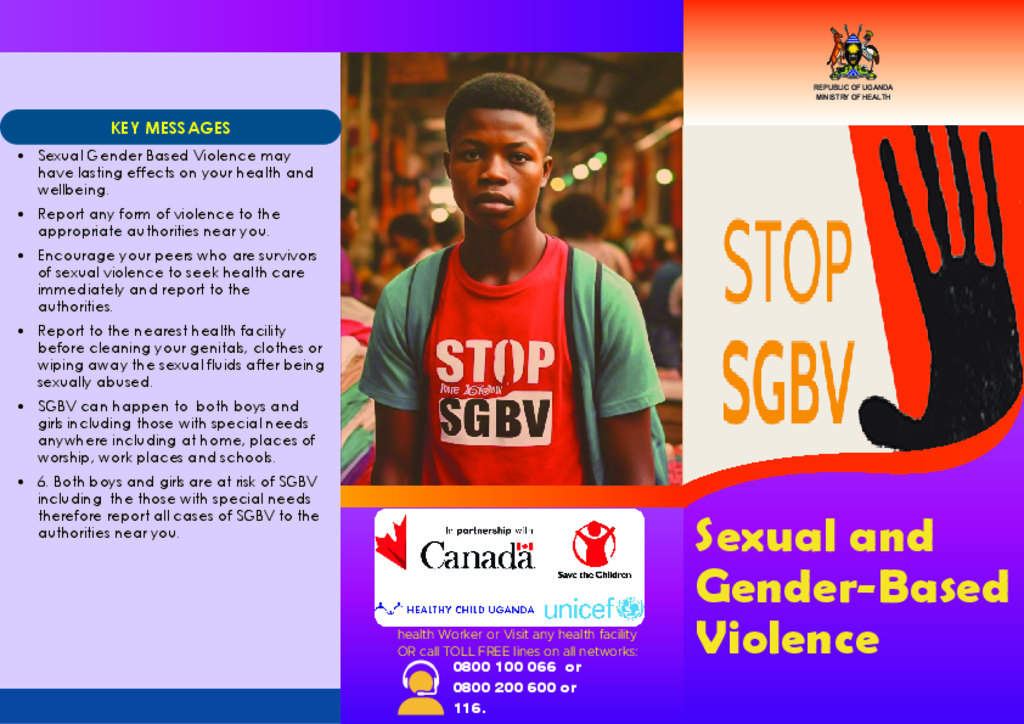
Sexual and Gender-Based Violence (SGBV) is a serious public health issue involving physical, emotional, sexual, and economic abuse affecting all individuals. It leads to severe consequences such as injuries, mental health problems, unwanted pregnancies, and infections, including HIV. The document emphasizes prevention, early reporting, and seeking immediate medical care within 72 hours to reduce harm and ensure support.
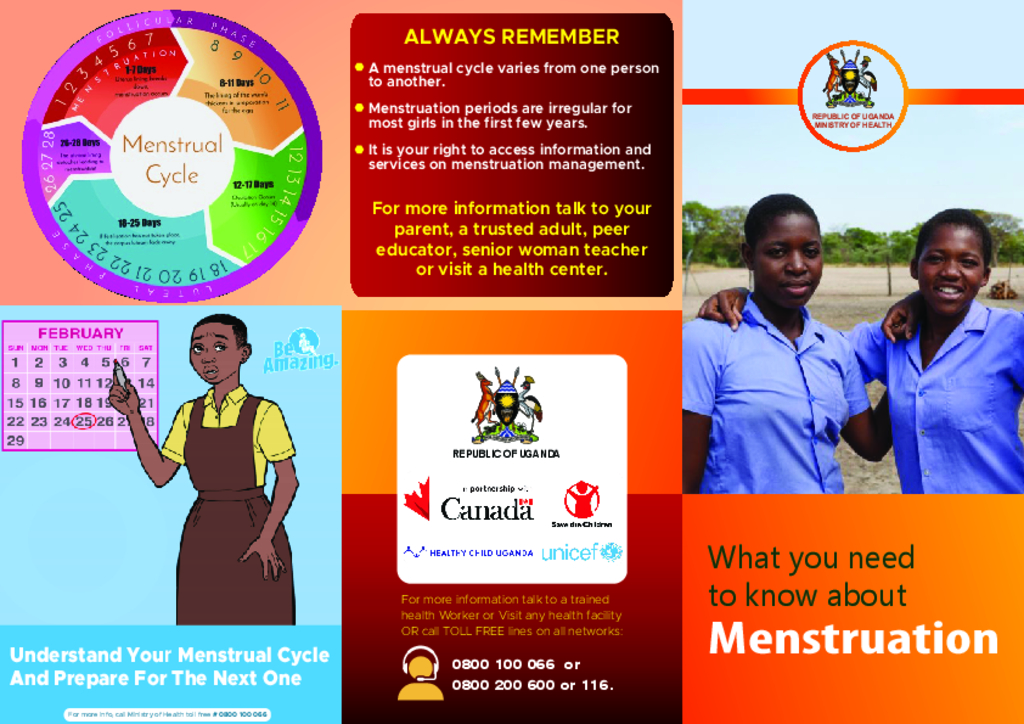
Menstruation is a normal monthly process in which blood flows from the uterus, marking the beginning of a girl’s reproductive maturity. The menstrual cycle involves phases of bleeding, preparation, ovulation, and renewal, and may be irregular in early years. Proper hygiene, pain management, and accurate information are essential for healthy menstruation. Although menstruation signals fertility, it does not mean readiness for sex or marriage.
The aim of Pregnancy, childbirth, postpartum and newborn care guide for essential practice (PCPNC) is to provide evidence-based recommendations to guide health care professionals in the management of women during pregnancy, childbirth and postpartum, and post abortion, and newborns during their first week of life, including management of endemic diseases like malaria, HIV/AIDS, TB and anaemia.
These guidelines provide guidance on definition of sexual harassment; applicable legal and policy frameworks; and outline strategies for prevention and response services and implementation mechanism for addressing sexual harassment in the health sector. The guidelines also provide detailed response mechanisms to complaints of harassment, monitoring and evaluation of sexual harassment reported complaints as well as institutional stakeholders in fighting sexual harassment.
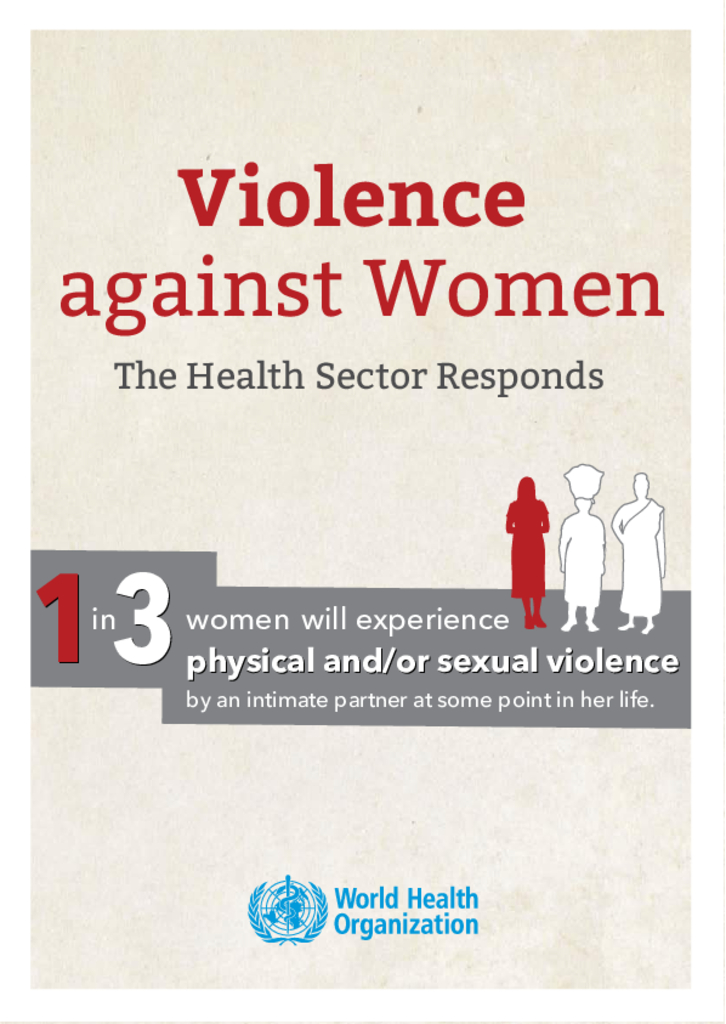
Studies from different countries show that the percentage of women 15 to 49 years old who've experienced physical and/or sexual violence by an intimate partner in their lifetime ranges from 15% to 71%
This, the firstWorld report on violence and health, is an important part of WHO’s response to Resolution WHA49.25. It is aimed mainly at researchers and practitioners. The latter include health care workers, social workers, those involved in developing and implementing prevention programmes and services, educators and law enforcement officials. A summary of the report is also available.1
Violence affects the lives of many Ugandans and when not fatal, can have long-lasting consequences. Deaths are only a fraction of the health and social burden arising from gender based violence and violence against children. Women and girls, children and the elderly bear a higher burden of non-fatal physical, sexual and psychological consequences of abuse

A central aim of the UK Government’s policy is to empower and enable women and adolescent girls1 to have sexual and reproductive choices; to avoid unwanted sexual contact, injury and infection; to make informed decisions about childbearing; and to face fewer risks in the course of pregnancy and childbirth. But millions of women still do not have access to good quality contraceptives, or have no control over the circumstances in which they become pregnant. Many die as a result of unsafe abortion; many more are permanently injured

Unsafe abortion is entirely preventable. Yet, it remains a significant cause of maternal morbidity and mortality in much of the developing world. Over the past decade, the World Health Organization has developed a systematic approach to estimating the regional and global incidence of unsafe abortion and the mortality associated with it. Estimates based on figures for the year 2000 indicate that 19 million unsafe abortions take place each year, that is, approximately one in ten pregnancies end in an unsafe abortion, giving a ratio of one unsafe abortion to about seven live births. Almost all unsafe abortions occur in developing countries