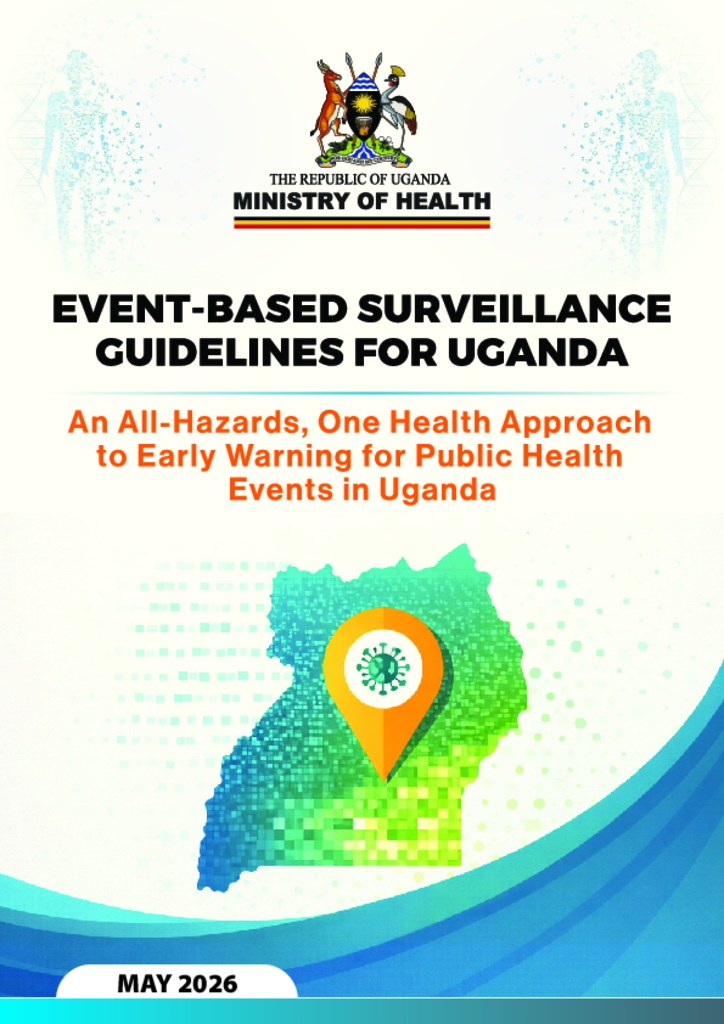
The Event-Based Surveillance (EBS) Guidelines for Uganda (May 2026) provide guidance for the early detection, reporting, verification, and response to public health events. They strengthen Uganda’s surveillance system through community and facility reporting, coordinated stakeholder action, and a One Health approach to improve preparedness and rapid response to health emergencies.
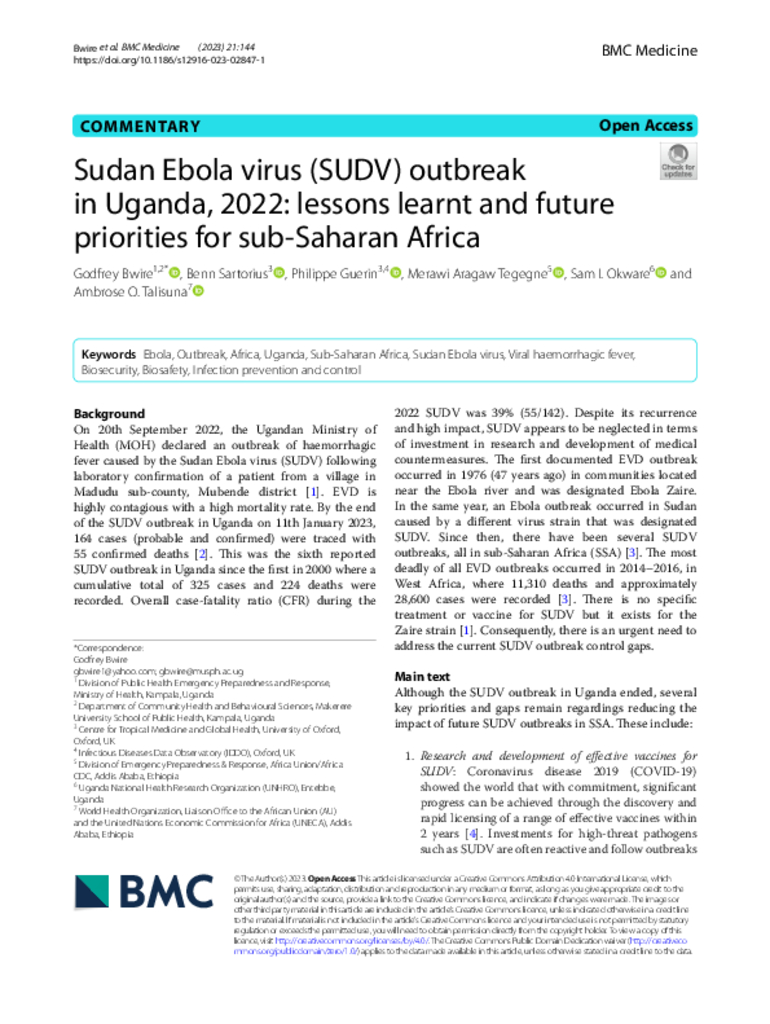
Despite recurrent outbreaks of the Sudan Ebola virus (SUDV), the disease remains neglected with limited investment in research and development of medical countermeasures and other innovations for its rapid containment. This research article discusses the lessons learnt and future priorities for sub-Saharan Africa concerning the SUDV outbreak in Uganda, 2022.
The World Health Organization (WHO) has developed this rapid guidance document in close collaboration with the Governments of Guinea, Liberia and Sierra Leone; the Centers for Disease Control and Prevention (CDC), Atlanta, USA; the Infection Control Africa Network (ICAN); and the United Nations Children’s Fund (UNICEF). This document has been endorsed by the Governments of Liberia and Sierra Leone and is currently under review by the Government of Guinea. The information contained in this document is based on current evidence and expert opinion.

"Ebola threatens everything that makes us human," says Bruce Aylward of World Health Organisation. With calm measure, Bruce walks us through how the Ebola epidemic exploded.