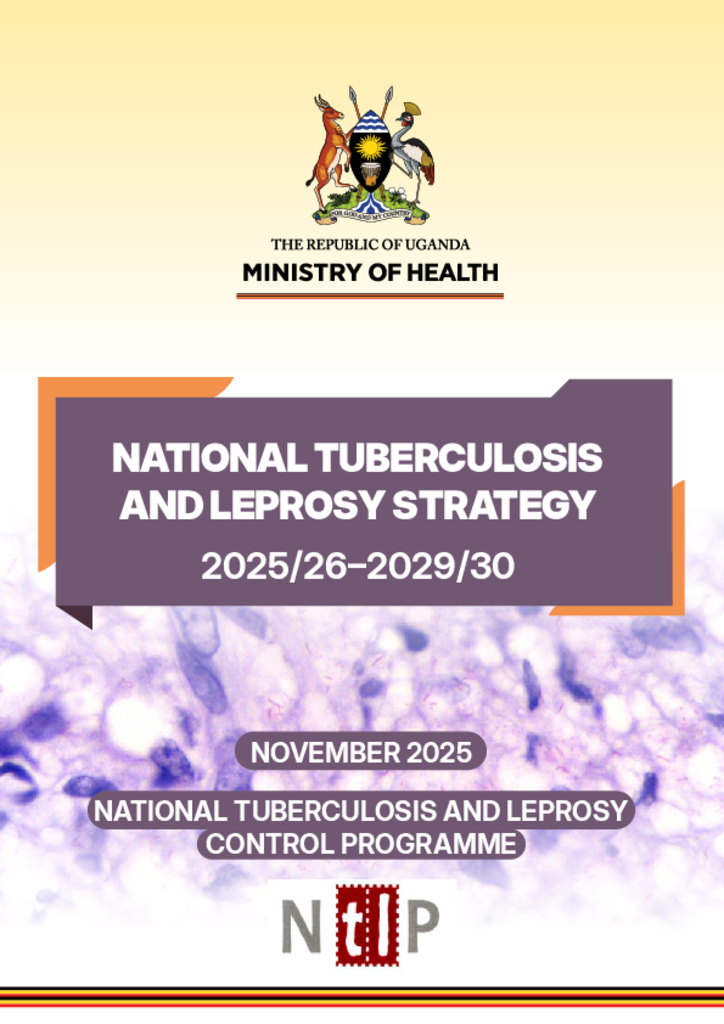
The National Tuberculosis and Leprosy Strategy (2025/26–2029/30) presents Uganda’s approach to reducing the burden of TB and leprosy through improved diagnosis, treatment, and prevention. Despite progress, challenges such as undiagnosed cases, drug resistance, and weak health systems persist. The strategy emphasises a people-centred, multisectoral approach to achieve the elimination of these diseases by 2030.
The National Immunisation Strategy (NIS) replaces the comprehensive Multi-Year Plan (cMYP) as a country-specific guiding tool for the planning, coordination and implementation of immunisation activities. The strategy clearly defines what is to be achieved in the next five years, in terms of the anticipated results and impact in accordance with UNEPI’s vision, mission, goals and objectives. This strategy aims at ensuring that the national strategic priorities and activities improve and sustain immunisation coverage, disease surveillance and address outstanding recommendations from previous program reviews and assessments.
The EPI Data Quality Improvement Plan (DQIP) details the processes, tools, and techniques employed to ensure data is accurate, consistent, complete, and up-to-date. The purposes of a DQIP include serving as a roadmap to data quality improvement, promoting the importance of data quality and integrating a multi-stakeholder approach to maximizing data quality.

This Monitoring and Evaluation (M&E) Plan is anchored on the inclusive partnership between UNEPI and the stakeholders. It establishes a common platform to monitor the National Immunization Strategy (NIS 2024-2028) for the accomplishment of program objectives hence attaining the program mission goal and vision.