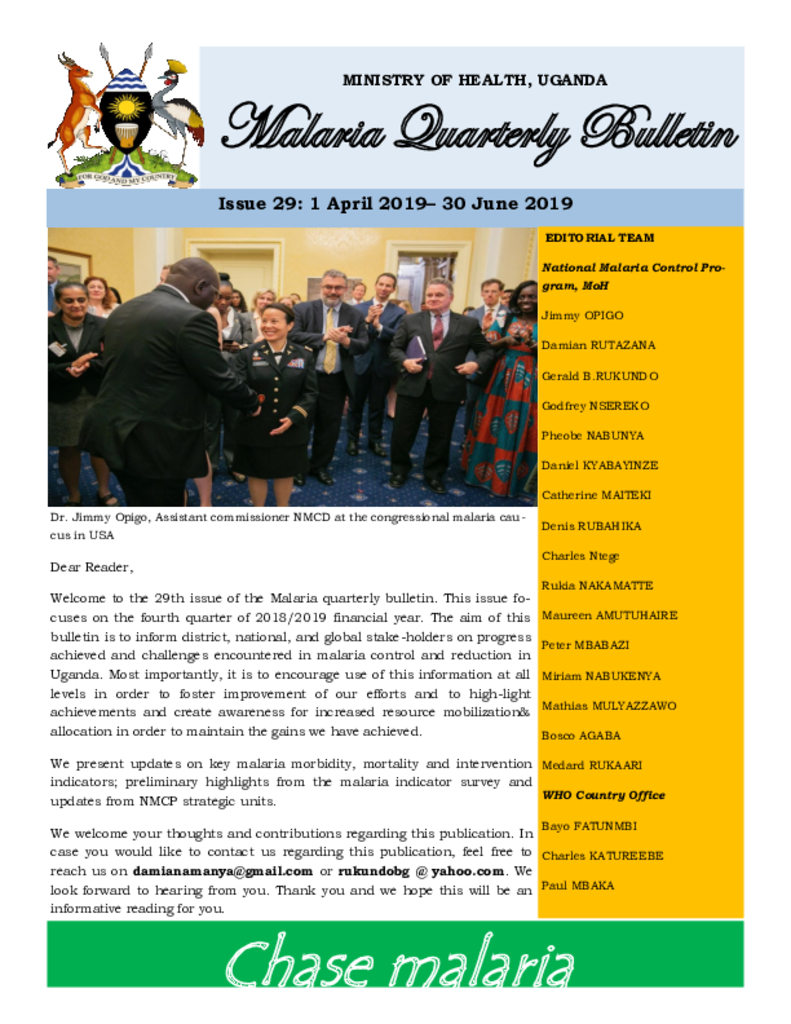
Malaria prevalence has reduced from 42% in 2009 to 19% in 2014 and is currently at 9% in 2018 according to the preliminary results from the malaria indicator survey (MIS). This period had an increase in cases and Test Positivity rate (TPR) compared to the same period in 2018. It also had an increased occurrence of malaria upsurges/epidemics which was attributed to largely the aging of nets and climatic changes
Uganda has the sixth highest number of annual deaths from malaria in Africa, as well as some of the highest reported malaria transmission rates in the world, with approximately 16 million cases reported in 2013 and over 10,500 deaths annually. In addition, malaria has an indirect impact on the economy and development in general. The socio-economic impact of malaria includes out-of-pocket expenditure for consultation fees, drugs, transport and subsistence at a distant health facility. These costs are estimated to be between USD 0.41 and USD 3.88 per person per month (equivalent to USD 1.88 and USD 26 per household).
Uganda has been heralded in the scientific media as one of the world's earliest and most compeling AIDS prevention success stories due its unprecedented HIV prevalence decline from 18% in 1992 to 6.2 in 2002
The National Strategic Framework (NSF) for HIV/AIDS Activities in Uganda was developed to cover the period 2000/01-2005/05. Late in 2003, a forward looking Mid Term Review (MTR) of the NSF was undertaken to assess progress and to identify gaps and emerging issues in implementation of the NSF. This culminated into the revision of the NSF for the period 2003/04-2005/06. This Revised National Strategic Framework for HIV/AIDS Activities in Uganda: 2003/04- 2005/06 is the resulting product
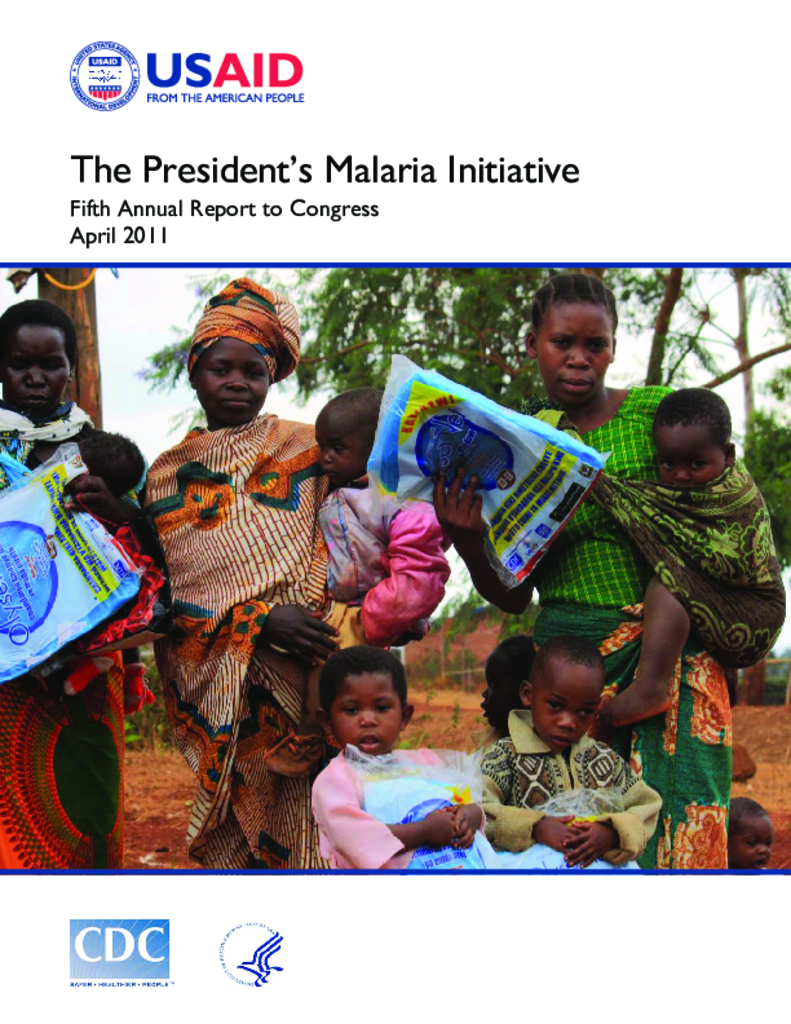
Over the past five years, substantial reductions have been recorded in mortality in children under five years of age, buttressed by improvements in malaria-specific indicators in all President’s Malaria Initiative (PMI)-supported countries where baseline and follow-up nationwide household surveys were conducted. These reductions are due in large part to a dramatic scale-up of malaria prevention and treatment measures since 2005, thanks to the collective efforts of national governments; the U.S. Government (USG); the Global Fund to Fight AIDS, Tuberculosis and Malaria; the World Bank; other international donors; and multilateral and nongovernmental organizations. This report describes the role and contributions of the USG to reduce the burden of malaria in Africa and its impact on health systems. The activities and results described below represent the effect of the first four years of PMI funding (fiscal years 2006–2009), or approximately 60 percent of the $1.265 billion requested for the Initiative.
Guidance on PMTCT is provided regularly to countries by WHO. Uganda launched the first PMTCT policy guidelines in 2002,following lessons learnt from the PMTCT pilot in 2000. Main drug was sd NVP tab for mother in labour and baby within 72 hours after delivery, AZT from 36 weeks of gestation, in labour and post partum in few sites. Recommending replacement feeding ideal for HIV positive pregnant women- infant formulae by UNICEF
Uganda has developed a National HIV Prevention Strategy to guide national efforts in the next phase of HIV prevention in the country in order to significantly reduce new HIV infections by about 30% by 2015. This, in line with the targets in the NDP would result in 40% reduction of the projected number of new infections in 2015, and avert about 200,000 new infections over five years. Virtual elimination of vertical infections is part of this overall goal.
The Lighthouse Trust was established in 2001 to provide a continuum of quality care and counselling as well as to improve the quality of life of people infected and affected by HIV/AIDS, including the terminally ill, in Lilongwe.
The HIV/AIDS epidemic in Uganda has had far reaching consequences not only for individuals, families and communities, but also for the country as a whole. In the education sector, the epidemic has emerged as a major threat to achieving Education for All (EFA) goals. The national success in the fight against HIV/AIDS in Uganda has been attributed to good and committed leadership, open policies and sustained advocacy. Policy confers legitimacy, sets priorities and goals and establishes accountability for the different partners operating in the area.
By end of June 2010, there were 414 accredited facilities providing ART services in the public and private sector in Uganda. The number of active ART clients had increased to 237,070 by June 2010, of whom 89 percent were adults aged over 15 years, 8 percent were children aged less than 15 years, and 3 percent had their age not specified. By end of June 2010, the cumulative number of individuals who had ever started ART in Uganda was 343,809, implying that the current enrolment is 69% of this total. During the quarter April – June 2010, 15,312 clients were enrolled onto ART country wide. Among the 89 percent (211,287) of adults clients with information on ART regimen, 97.1 percent (184,033) were on standard first-line regimens, 2.9% (5,508) on second-line regimen. Among 19,089 children with ARV regimens specified, 96 percent were on first-line regimen.

Uganda was one of the first African countries to respond aggressively to the HIV/AIDS epidemic, moving rapidly to institute measures aimed at preventing HIV transmission. HIV prevalence rates once described as being among the highest in Africa and tending toward 30% have declined to under 10 % within the last two decades. Although there is evidence of a decline in new infections, the number of people already infected and progressing to AIDS is increasing
The MTCT-Plus Initiative was conceived in 2001 as a response to the five-point Call to Action on HIV/AIDS issued by Kofi Annan, United Nations Secretary-General. Designed to increase access to HIV/AIDS care and treatment in resource-limited settings, the Initiative built on the dramatic changes that had taken place in the preceding year. Burgeoning political support for HIV/AIDS treatment following the XIII International AIDS conference in Durban, South Africa in 2000 had culminated in the United Nations General Assembly Special Session on HIV/AIDS in 2001