This interagency handbook was developed by the Roll Back Malaria(RBM) Technical Support Network on Complex Emergencies. It focuses on effective malaria control responses to complex emergencies, particularlyduring the acute phase when reliance on international humanitarian assistance is greatest. It provides policy-makers,planners, field programme managers and medical coordinators with practical guidance on designingand implementing measures to reduce malaria morbidity and mortality.
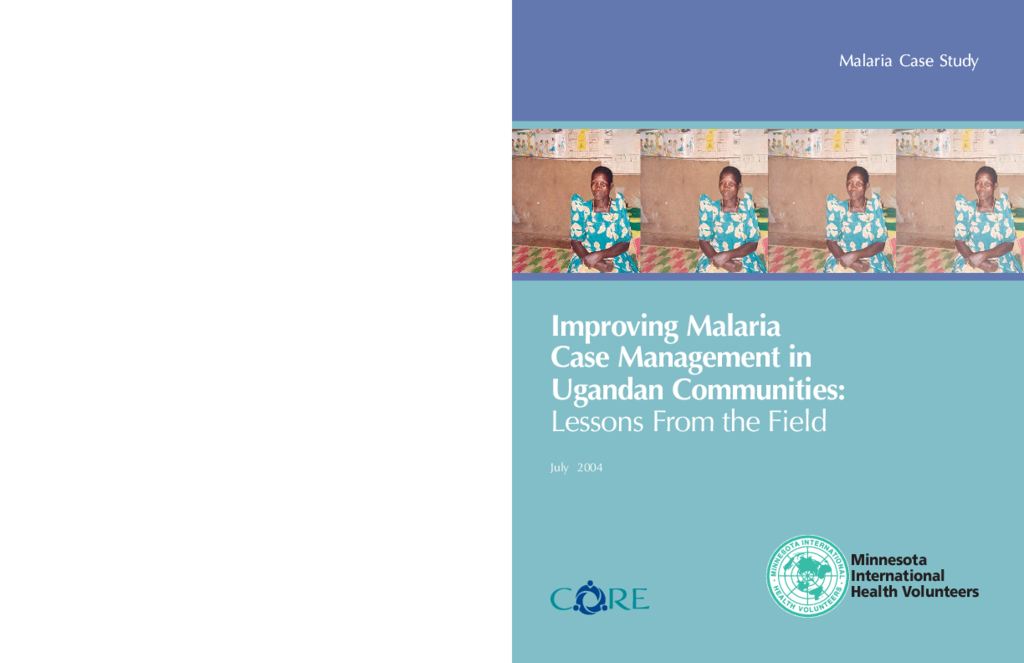
This case study focuses on malaria case management activities was implemented in Ssembabule District, Uganda, by Minnesota International HealthVolunteers (MIHV) during the second phase of a U.S. Agency forInternational Development (USAID)-funded Child Survival project (1996-2000).
This publication draws upon current guidelines and information documents issued by the World Health Organization (WHO), which provide more detailed guidance on implementation for each of the specific subject areas. The listed references are limited to key readings for implementation of programme activities and to texts that provide important additional background and supplementary information.
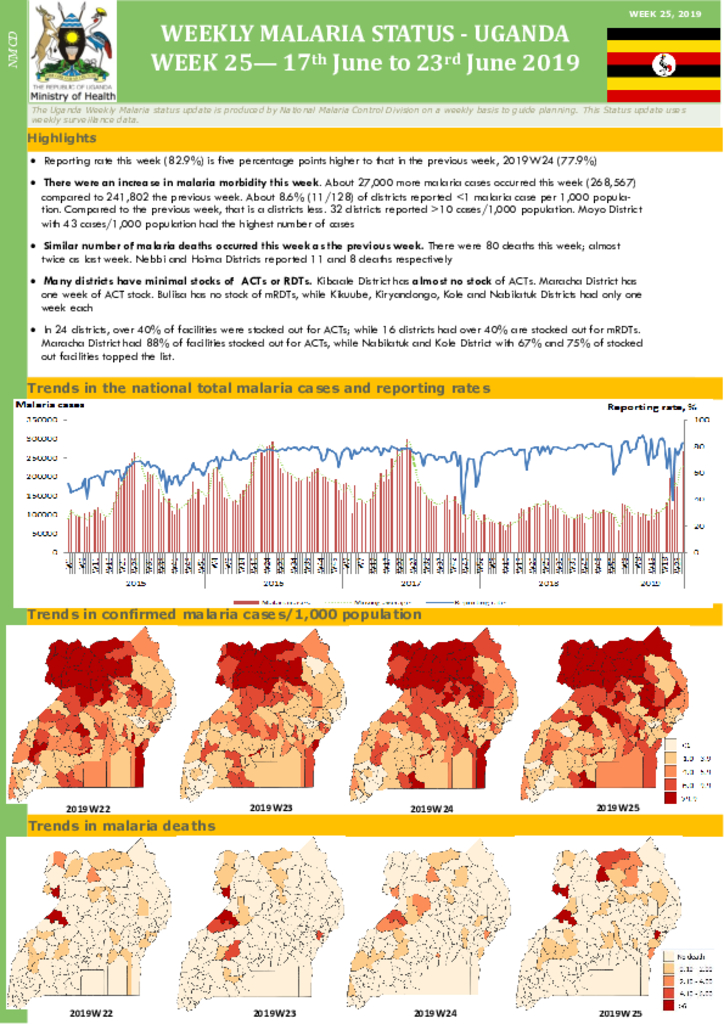
Reporting rate this week (82.9%) is five percentage points higher to that in the previous week, 2019W24 (77.9%) There were an increase in malaria morbidity this week. About 27,000 more malaria cases occurred this week (268,567) compared to 241,802 the previous week. About 8.6% (11/128) of districts reported <1 malaria case per 1,000 popula-tion. Compared to the previous week, that is a districts less. 32 districts reported >10 cases/1,000 population. Moyo District with 43 cases/1,000 population had the highest number of cases Similar number of malaria deaths occurred this week as the previous week.
There were 80 deaths this week; almost twice as last week. Nebbi and Hoima Districts reported 11 and 8 deaths respectively Many districts have minimal stocks of ACTs or RDTs. Kibaale District has almost no stock of ACTs. Maracha District has one week of ACT stock. Buliisa has no stock of mRDTs, while Kikuube, Kiryandongo, Kole and Nabilatuk Districts had only one week each In 24 districts, over 40% of facilities were stocked out for ACTs; while 16 districts had over 40% are stocked out for mRDTs. Maracha District had 88% of facilities stocked out for ACTs, while Nabilatuk and Kole District with 67% and 75% of stocked out facilities topped the list.
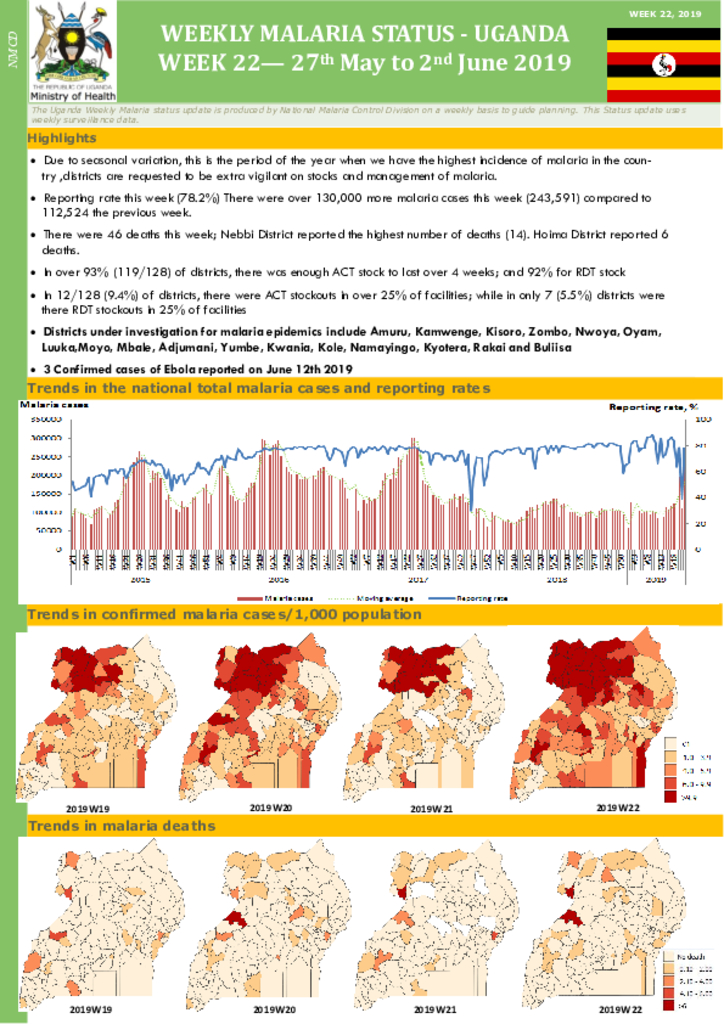
Due to seasonal variation, this is the period of the year when we have the highest incidence of malaria in the country
,districts are requested to be extra vigilant on stocks and management of malaria. Reporting rate this week (78.2%) There were over 130,000 more malaria cases this week (243,591) compared to 112,524 the previous week. There were 46 deaths this week; Nebbi District reported the highest number of deaths (14). Hoima District reported 6 deaths. In over 93% (119/128) of districts, there was enough ACT stock to last over 4 weeks; and 92% for RDT stock In 12/128 (9.4%) of districts, there were ACT stockouts in over 25% of facilities; while in only 7 (5.5%) districts were there RDT stockouts in 25% of facilities Districts under investigation for malaria epidemics include Amuru, Kamwenge, Kisoro, Zombo, Nwoya, Oyam, Luuka,Moyo, Mbale, Adjumani, Yumbe, Kwania, Kole, Namayingo, Kyotera, Rakai and Buliisa
3 Confirmed cases of Ebola reported on June 12th 2019
These Guidelines on the management of latent tuberculosis infection were developed in accordance to the requirements and recommended process of the WHO Guideline Review Committee, and provide public health approach guidance on evidence-based practices for testing, treating and managing LTBI in infected individuals with the highest likelihood of progression to active disease.
The guidelines are also intended to provide the basis and rationale for the development of national guidelines. The guidelines are primarily targeted at high-income or upper middle-income countries with an estimated TB incidence rate of less than 100 per 100 000 population. Resource-limited and other middle-income countries that do not belong to the above category should implement the existing WHO guidelines on people living with HIV and child contacts below 5 years of age.
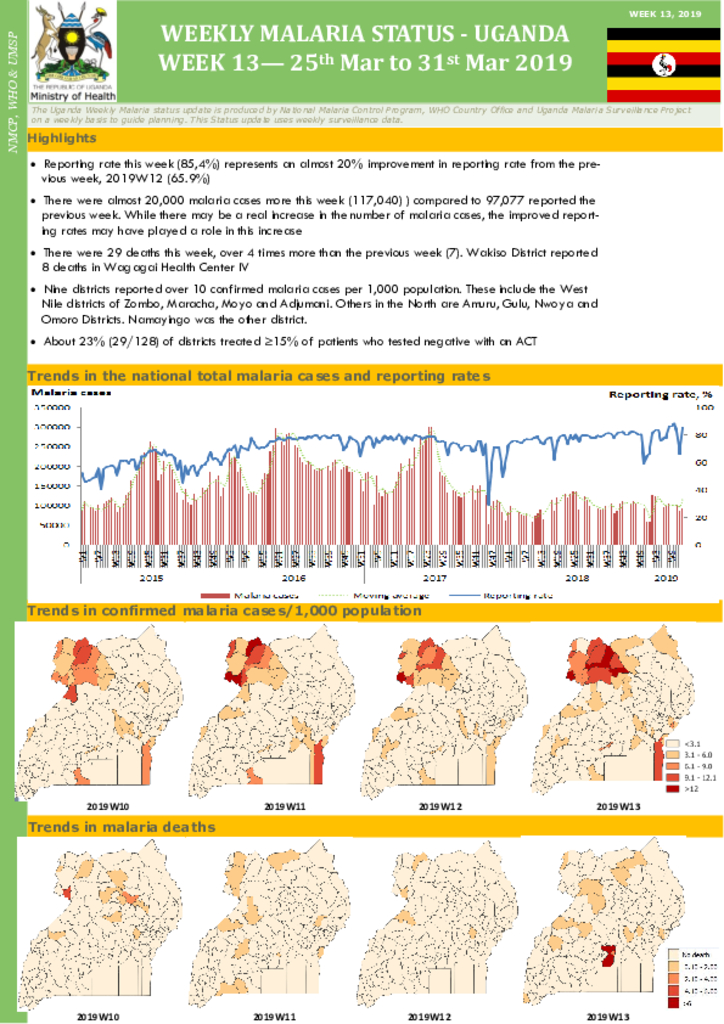
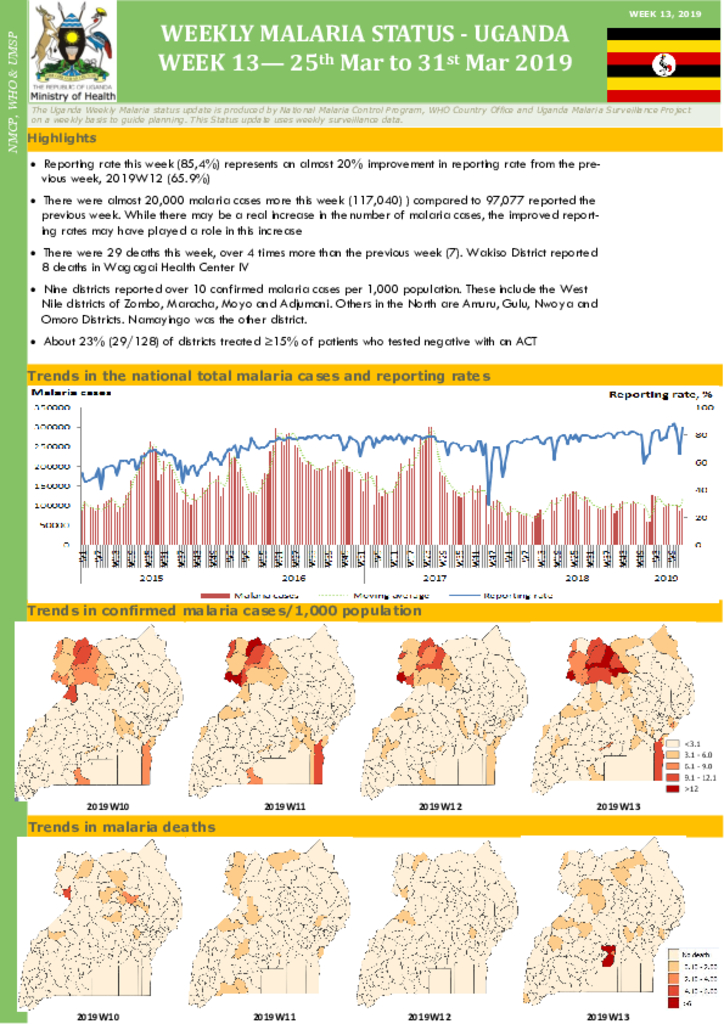
Reporting rate this week (85,4%) represents an almost 20% improvement in reporting rate from the pre-vious week, 2019W12 (65.9%)
There were almost 20,000 malaria cases more this week (117,040) ) compared to 97,077 reported the previous week. While there may be a real increase in the number of malaria cases, the improved report-ing rates may have played a role in this increase
There were 29 deaths this week, over 4 times more than the previous week (7). Wakiso District reported 8 deaths in Wagagai Health Center IV. Nine districts reported over 10 confirmed malaria cases per 1,000 population. These include the West Nile districts of Zombo, Maracha, Moyo and Adjumani. Others in the North are Amuru, Gulu, Nwoya and Omoro Districts. Namayingo was the other district. About 23% (29/128) of districts treated ≥15% of patients who tested negative with an ACT
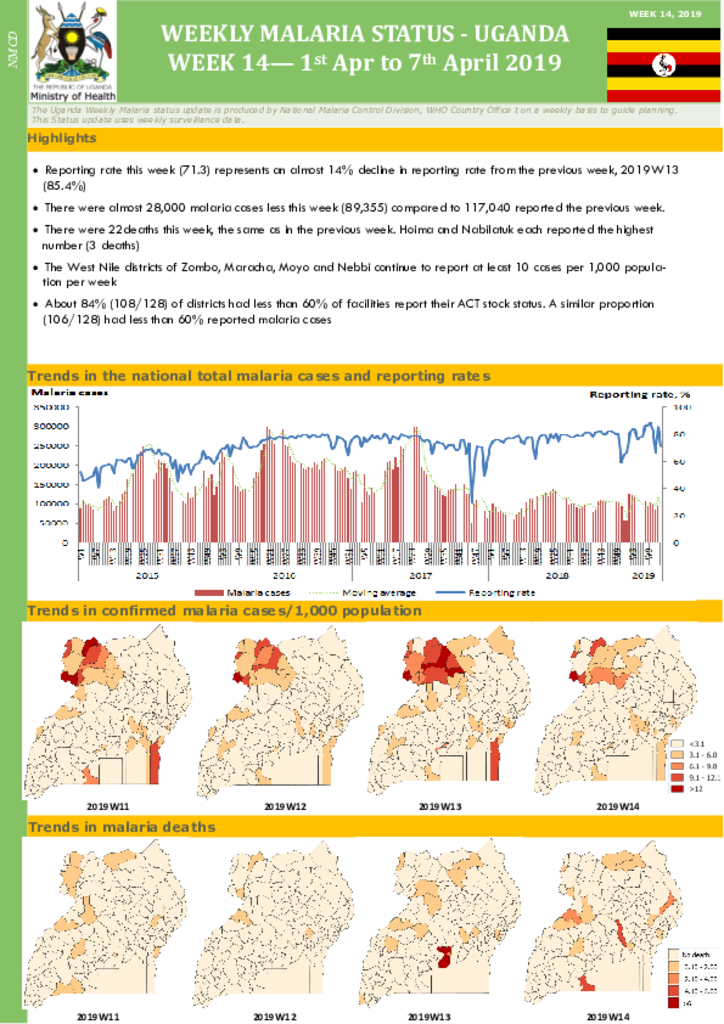
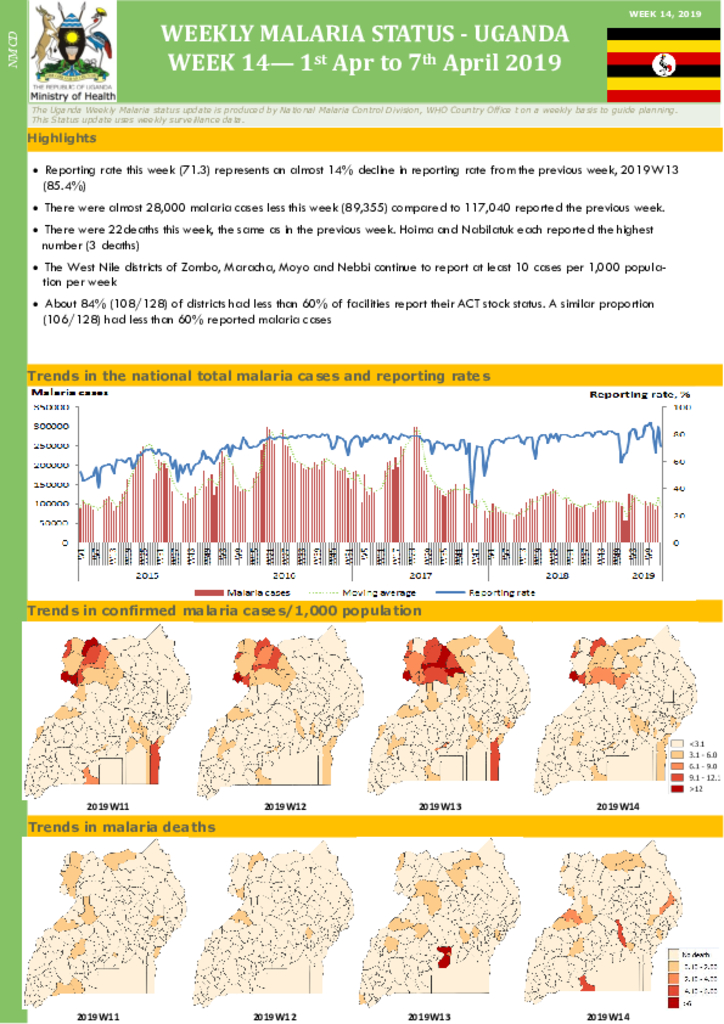
Reporting rate this week (71.3) represents an almost 14% decline in reporting rate from the previous week, 2019W13 (85.4%)
There were almost 28,000 malaria cases less this week (89,355) compared to 117,040 reported the previous week. There were 22deaths this week, the same as in the previous week. Hoima and Nabilatuk each reported the highest number (3 deaths)The West Nile districts of Zombo, Maracha, Moyo and Nebbi continue to report at least 10 cases per 1,000 popula-tion per week About 84% (108/128) of districts had less than 60% of facilities report their ACT stock status. A similar proportion (106/128) had less than 60% reported malaria cases
The year 2015 is a watershed moment in the battle against tuberculosis (TB). It marks the deadline for global TB targets set in the context of the Millennium Development Goals (MDGs), and is a year of transitions: from the MDGs to a new era of Sustainable Development Goals (SDGs), and from the Stop TB Strategy to the End TB Strategy. It is also two decades since WHO established a global TB monitoring system; since that time, 20 annual rounds of data collection have been completed.
Important recent changes or additions to guidelines for the management of tuberculosis (TB) in children have made it necessary to revise the first edition of Guidance for national tuberculosis programmes on the management of tuberculosis in children, published by WHO in 2006. Like the 2006 guidance, this document is targeted at national TB programmes, paediatricians and other health workers in low- and middle-income countries; it does not aim to outline recommendations for high-income countries with low TB prevalence. This distinction is especially important in the diagnostic approach and in contact investigation.
Reporting rate this week (71.3) represents an almost 14% decline in reporting rate from the previous week, 2019W13 (85.4%)
There were almost 28,000 malaria cases less this week (89,355) compared to 117,040 reported the previous week. There were 22deaths this week, the same as in the previous week. Hoima and Nabilatuk each reported the highest number (3 deaths)The West Nile districts of Zombo, Maracha, Moyo and Nebbi continue to report at least 10 cases per 1,000 popula-tion per week About 84% (108/128) of districts had less than 60% of facilities report their ACT stock status. A similar proportion (106/128) had less than 60% reported malaria cases
Reporting rate this week (85,4%) represents an almost 20% improvement in reporting rate from the pre-vious week, 2019W12 (65.9%)
There were almost 20,000 malaria cases more this week (117,040) ) compared to 97,077 reported the previous week. While there may be a real increase in the number of malaria cases, the improved report-ing rates may have played a role in this increase.
There were 29 deaths this week, over 4 times more than the previous week (7). Wakiso District reported 8 deaths in Wagagai Health Center IV. Nine districts reported over 10 confirmed malaria cases per 1,000 population. These include the West Nile districts of Zombo, Maracha, Moyo and Adjumani. Others in the North are Amuru, Gulu, Nwoya and Omoro Districts. Namayingo was the other district. About 23% (29/128) of districts treated ≥15% of patients who tested negative with an ACT