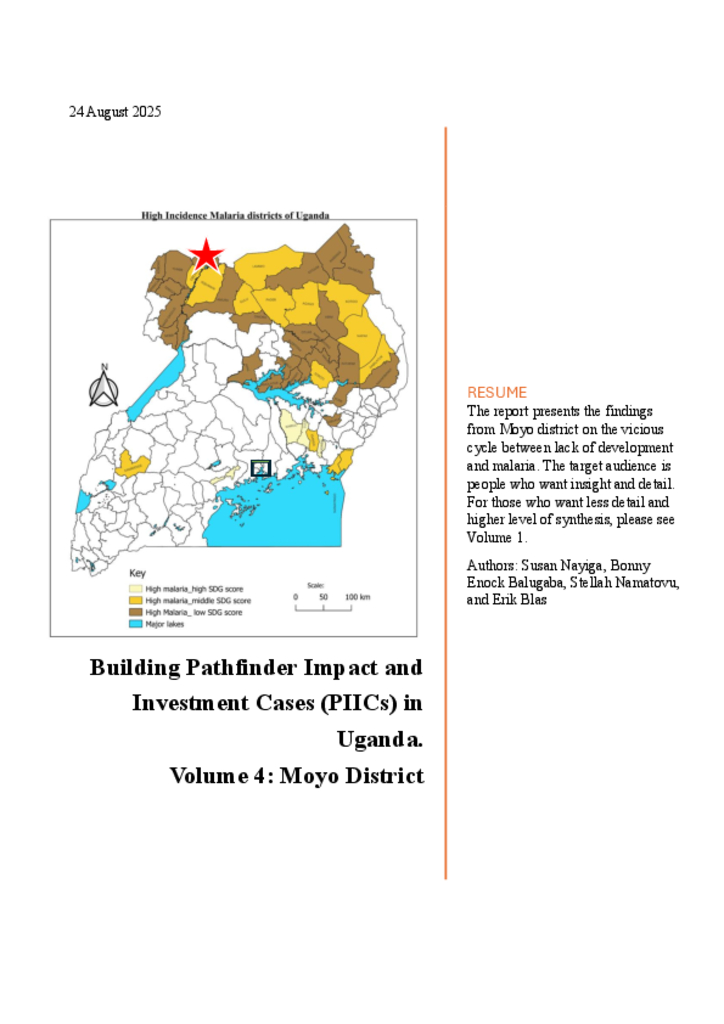
This report presents the Pathfinder Impact and Investment Cases for Kapelebyong, Kitgum, and Moyo, demonstrating how integrated, district-led interventions can reduce malaria and accelerate sustainable development.
Review of Pathfinder Impact and Investment Cases (PIICs) and priorities to halt the vicious cycles between lack of development and malaria in Kapelebyong, Kitgum, and Moyo districts (Kampala, 3. September 2025)
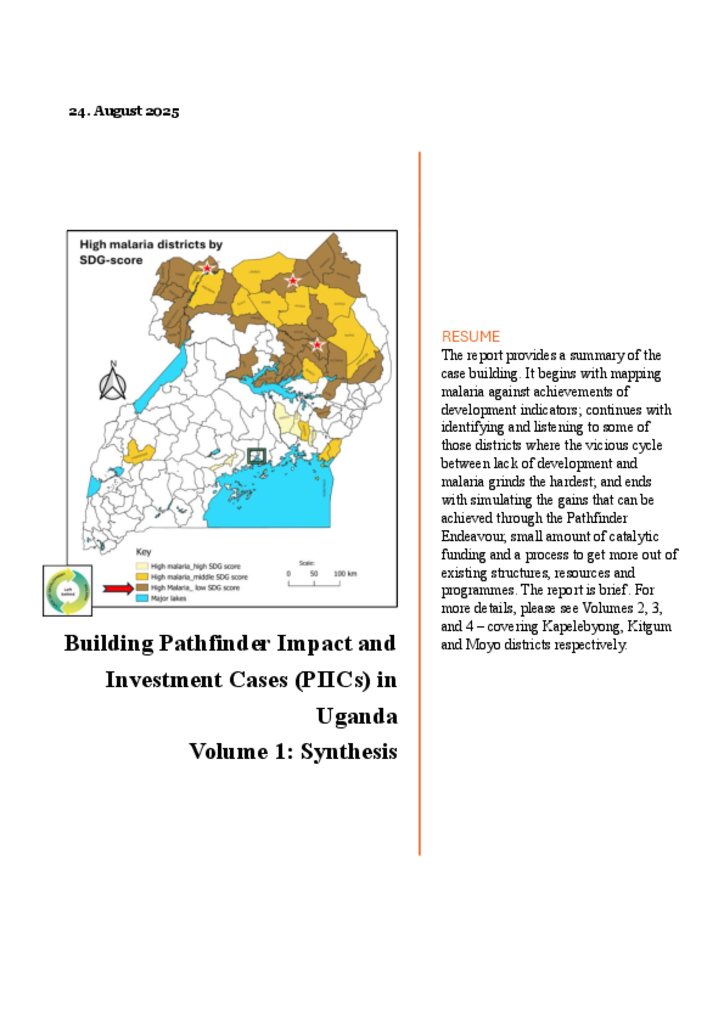
This report synthesizes the Pathfinder Impact and Investment Cases (PIICs) for Kapelebyong, Kitgum, and Moyo, highlighting how integrated, district-led multisectoral action can reduce malaria, strengthen development, and promote sustainable outcomes through improved accountability and targeted investments.
The National Tuberculosis and Leprosy Strategy (2025/26–2029/30) presents Uganda’s approach to reducing the burden of TB and leprosy through improved diagnosis, treatment, and prevention. Despite progress, challenges such as undiagnosed cases, drug resistance, and weak health systems persist. The strategy emphasises a people-centred, multisectoral approach to achieve the elimination of these diseases by 2030.
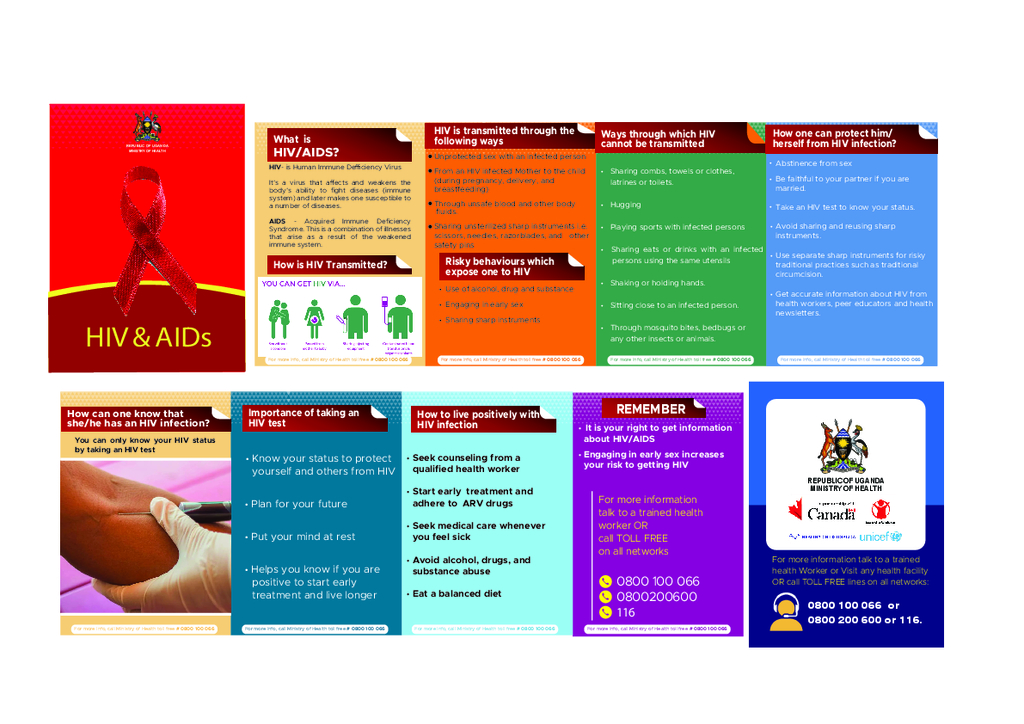
HIV weakens the immune system and can lead to AIDS if untreated. It spreads through unprotected sex, infected blood, mother-to-child transmission, and shared sharp instruments, but not through casual contact. Prevention, regular testing, and early treatment with antiretroviral drugs help individuals live healthy lives.

Despite the advancements, challenges in maintaining quality and consistency in HIV Testing have persisted, particularly with the decentralization of testing services and the involvement of lay testers. The revised National Certification Framework addresses these challenges by establishing comprehensive standards and procedures for certifying HIV rapid testing sites and testers. This framework is designed to ensure that all testing sites and personnel meet stringent quality requirements, thereby minimizing the risk of misdiagnosis and improving the overall reliability of HIV test results.

The HIV Recent Infection Surveillance – Public Health Response guide offers practical steps and procedures for conducting a PHR upon identifying hotspots for HIV acquisition. It clearly outlines the roles of both national and sub-national teams, ensuring a well-coordinated approach to implementation.
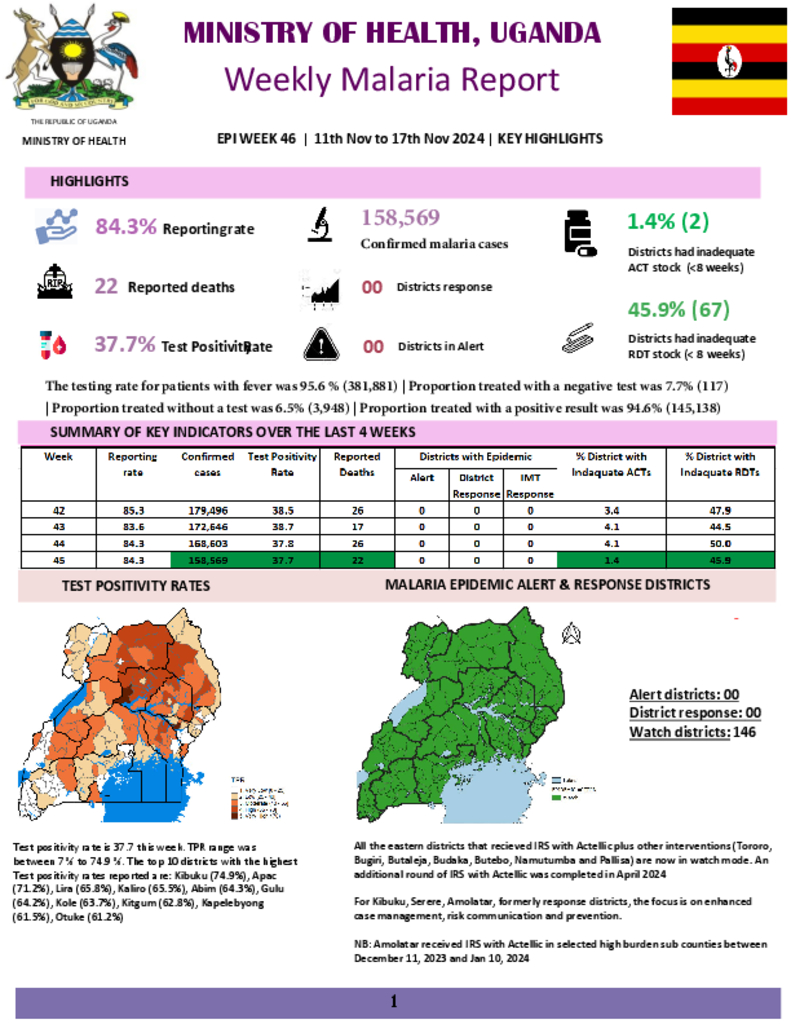
This weekly malaria report, serves to inform all stakeholders at community, districts and national level about the trends, public health surveillance and interventions undertaken in detecting, preventing and responding to malaria events in Uganda, on a weekly basis.
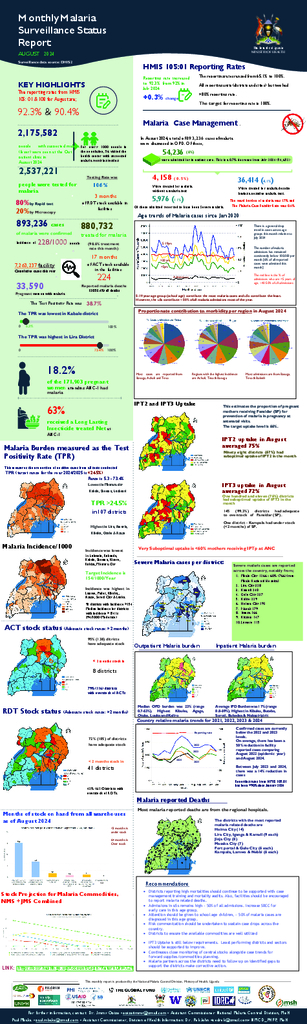
The malaria surveillance status report, serves to inform all stakeholders at community, districts and national level about the trends, public health surveillance and interventions undertaken in detecting, preventing and responding to malaria events in Uganda, for the month of August 2024.
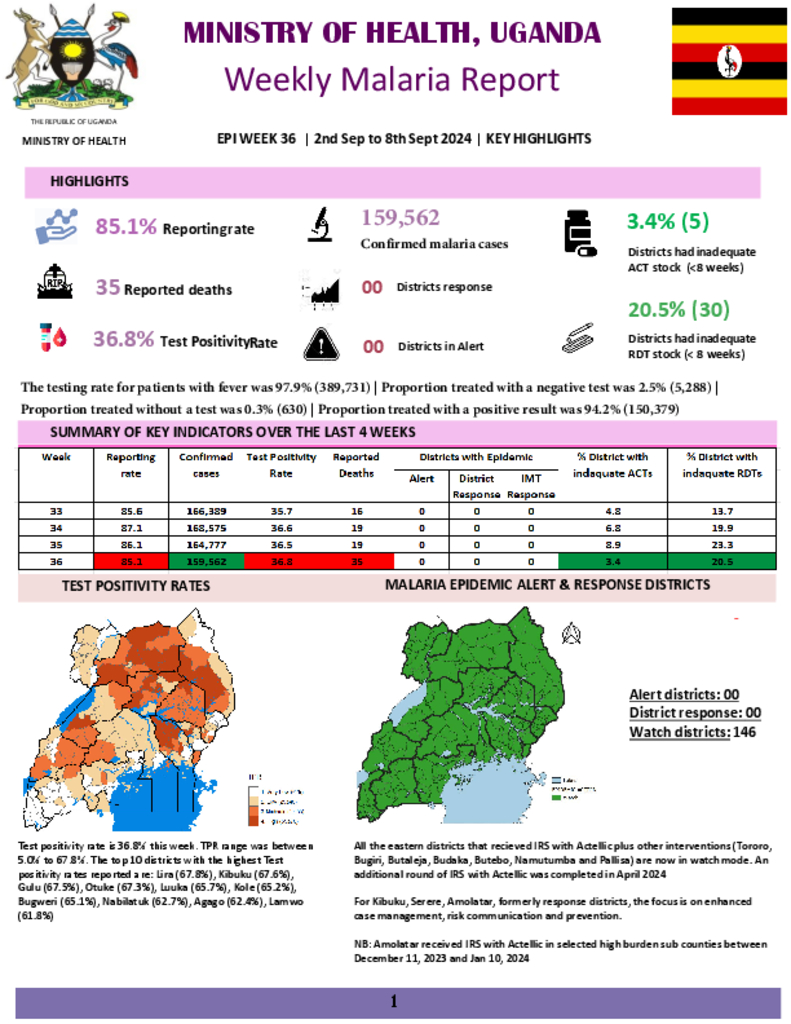
This weekly malaria report, serves to inform all stakeholders at community, districts and national levels about the trends, public health surveillance and interventions undertaken in detecting, preventing and responding to malaria events in Uganda, on a weekly basis.
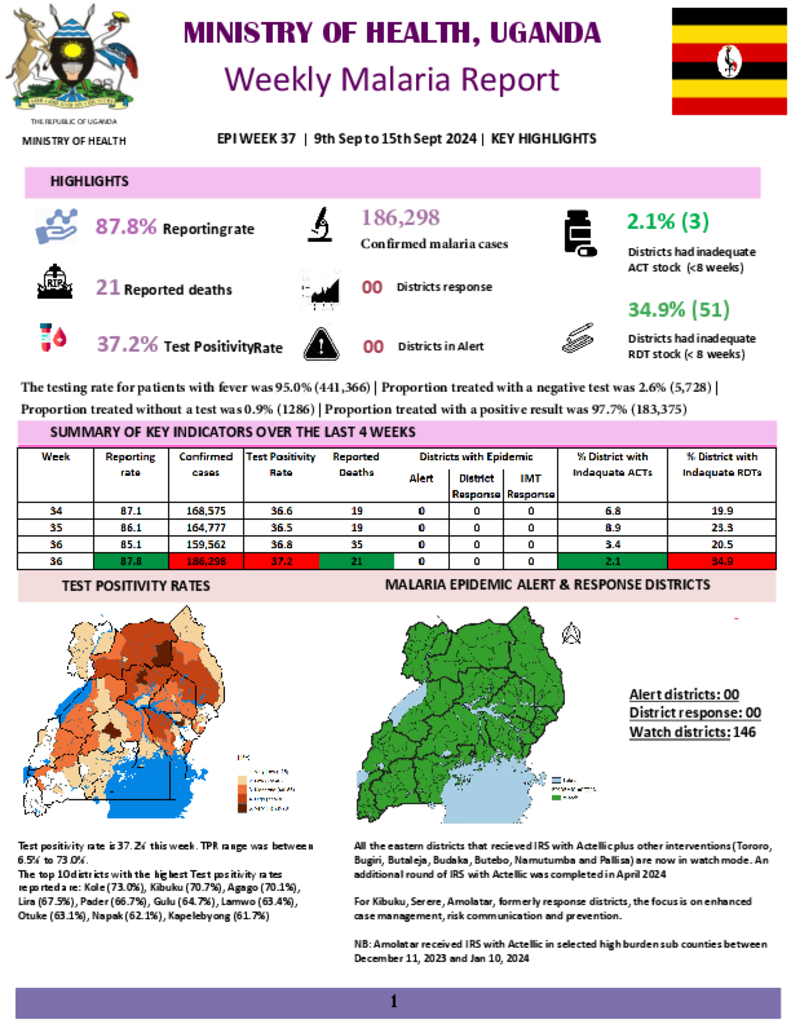
This weekly malaria report, serves to inform all stakeholders at community, districts and national levels about the trends, public health surveillance and interventions undertaken in detecting, preventing and responding to malaria events in Uganda, on a weekly basis.
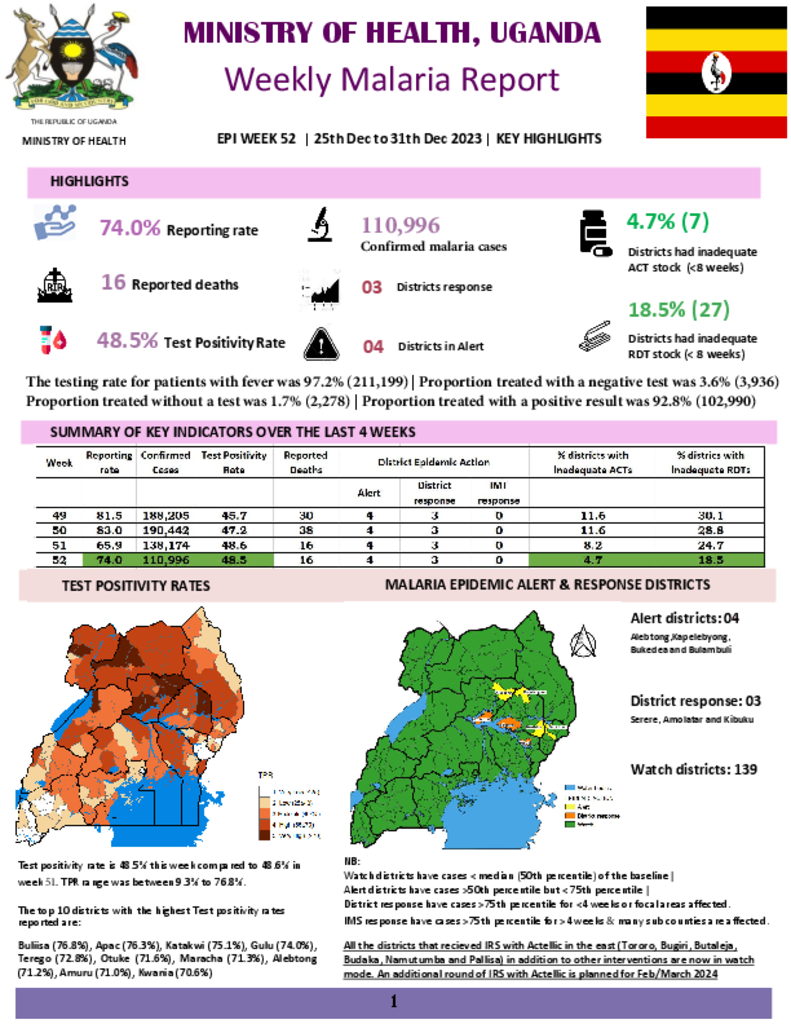
This weekly malaria report, serves to inform all stakeholders at community, districts and national levels about the trends, public health surveillance and interventions undertaken in detecting, preventing and responding to malaria events in Uganda, on a weekly basis.