Chapter 8A: Neonatal Emergencies provides evidence-based guidance for the assessment and management of common neonatal emergencies, including respiratory distress, sepsis, hypoglycaemia, jaundice, seizures, shock, and feeding difficulties. It outlines standard treatment protocols, stabilisation measures, referral procedures, and supportive care to improve neonatal survival and the quality of newborn healthcare services.
This guideline provides national standards for infection prevention and control in Uganda's health sector, promoting safe healthcare practices through evidence-based measures on infection prevention, surveillance, waste management, occupational safety, quality improvement, and outbreak preparedness to reduce healthcare-associated infections and protect patients and health workers.
The guideline provides a framework for maintaining essential health services during public health emergencies through coordinated governance, resilient health systems, and uninterrupted healthcare delivery in Uganda.
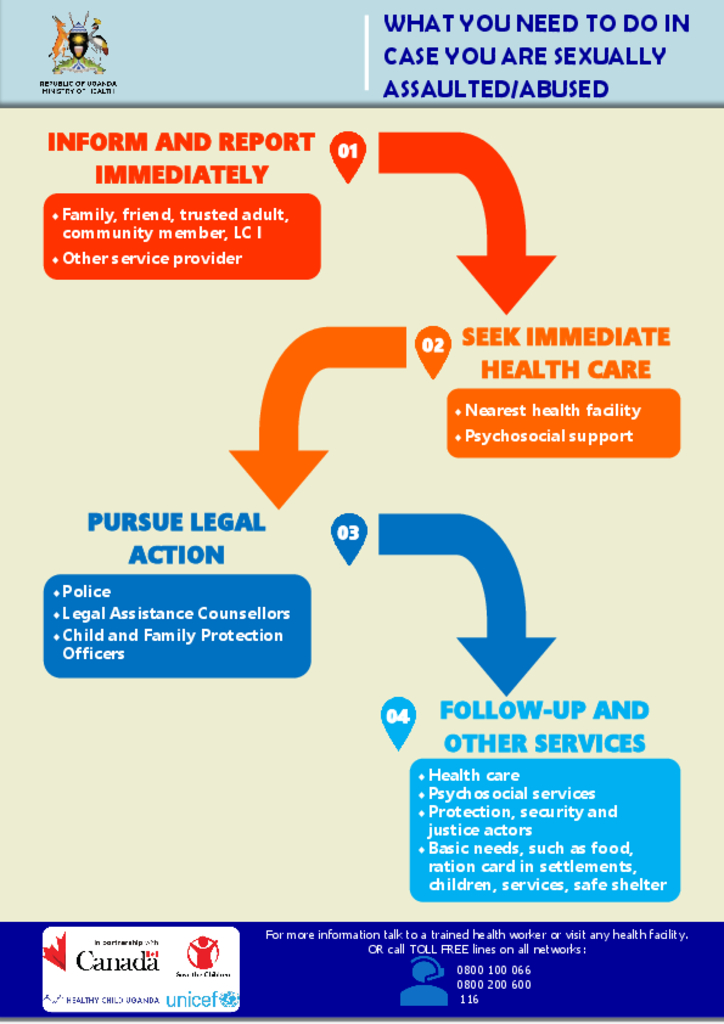
This document outlines key steps for responding to sexual assault, including immediate reporting, seeking medical care, accessing legal support, and ensuring follow-up services for recovery and protection.
The Uganda National Infection Prevention and Control (IPC) Guidelines, 2nd Edition, provide national standards for preventing healthcare-associated infections and improving patient and health worker safety. The guidelines outline core IPC components, surveillance, and quality improvement strategies aligned with WHO recommendations to strengthen routine and outbreak response practices across all healthcare levels
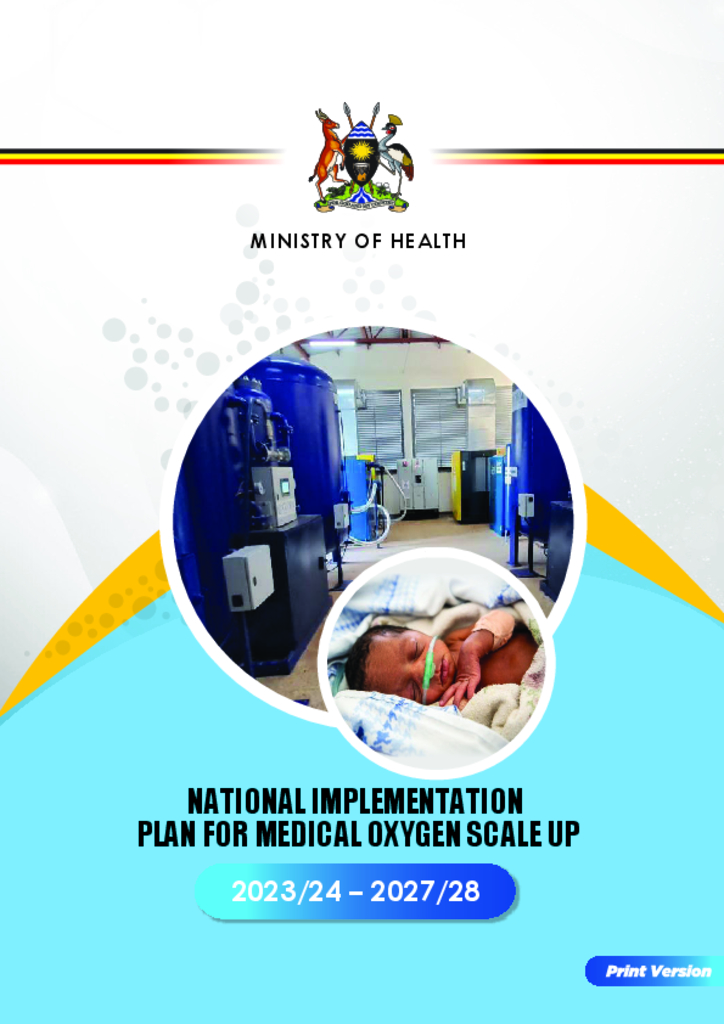
The National Implementation Plan for Medical Oxygen Scale-up (2023/24-2027/28) will provide strategic guidance on improving equitable access to quality medical oxygen therapy services, hence promoting oxygen security. The purpose of this plan is to consolidate the progress achieved over the past five years and establish sustainable systems that enhance oxygen programming for more effective outcomes in alignment with the National Health Strategy.
Emergency Medical Services (EMS) encompasses all stages of the emergency care continuum. Successive Annual Health Sector Performance reports (AHSPRs) continue to register emergency-related conditions among the 10 top causes of mortality. The EMS midterm review follows the last three years of focused prioritization and moderate investment in the national EMS system. This study was carefully conducted to bring out the successes, key lessons learned, challenges, and resources required for going forward. The report makes 14 recommendations to the Ministry of Health (MoH), grouped under three levels: short-term, medium-term and long-term.